Boeing Directs All Space Investment to Defense as Starliner Recovery Continues
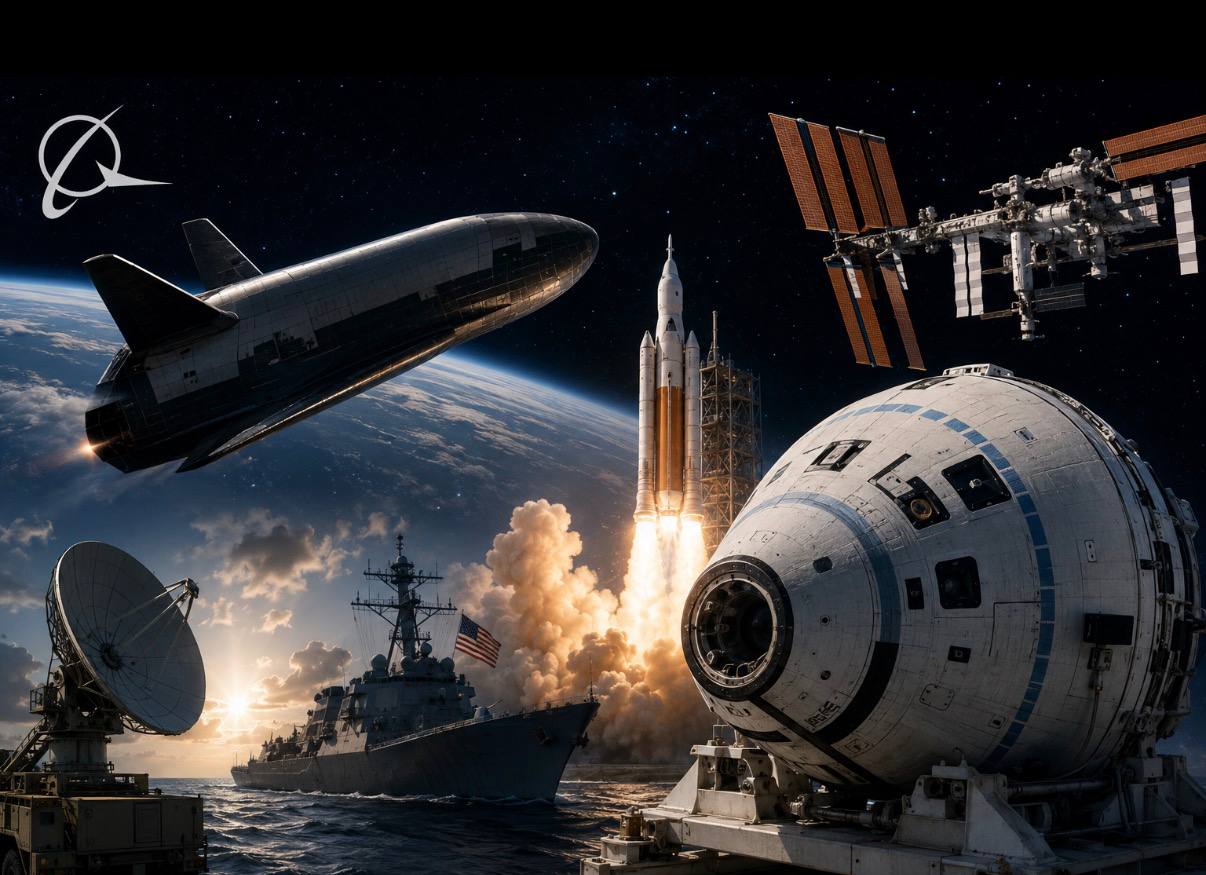
Boeing is concentrating its entire space investment on national security and defense work, its Defense, Space and Security CEO Steve Parker said, positioning the military side of the portfolio as the company's future while it works to get the troubled Starliner crew capsule back on track. Parker, speaking to reporters ahead of the Farnborough Air Show in London, framed defense as the area where Boeing is already a leader.
The comments come as Starliner has drawn nearly all public attention within Boeing's space portfolio. A crew flight test with NASA left two astronauts on the International Space Station far longer than originally expected after thruster failures, and the capsule ultimately returned to Earth uncrewed.
Parker said Boeing is directing all of its space investment toward work with the military, citing the Space Force's X-37B, which is currently in orbit, and satellite activities. "That's where I'm putting all of my investment," he said.
On Starliner, Parker said the company is working with NASA to answer all of the agency's questions to determine the next launch. "I believe we're ready," he said. NASA has said the next launch, which will be uncrewed, is expected in the next year or more. Parker pointed to a significant focus on root cause analysis and corrective action following the first flight. "We've tested out a number of improvements at White Sands and so forth, and again we share all that data with NASA," he said. "Up to them to make the call, but we're going to be ready to go, and we'll be ready to go next year."
Boeing is the prime contractor on the International Space Station, which Parker said will operate through 2032. "I think it may go longer. We're certainly supportive," he said. Earlier in the month, NASA released a draft request for proposals for the station's replacement, the Commercial Low-Earth Orbit Destination. The agency is looking to carry two or more contractors through early development, followed by a competitive order for final design of the station from one or more companies. "NASA is also looking at commercial in the future," Parker said. "This is very hard to do, to take people up into space. But I think there's a bright future ahead here."
Parker also highlighted the Artemis II launch, for which Boeing provided the core stage, calling it a "flawless launch." He described it as "just magnificent," noting that NASA took astronauts the furthest away from Earth.
Parker's remarks signal that Boeing sees its future in space within national security and defense, an area where he says the company is already a leader, even as it continues Starliner work with NASA and supports the International Space Station and Artemis programs.
NASA will make the call on the timing of the next Starliner launch, which is expected within the next year or more and will be uncrewed. The agency's draft request for proposals for the Commercial Low-Earth Orbit Destination sets up a competitive path that will carry two or more contractors through early development before a final design order.