Zhuque-3 Sticks First Land Landing, Then Topples in Post-Touchdown Fire
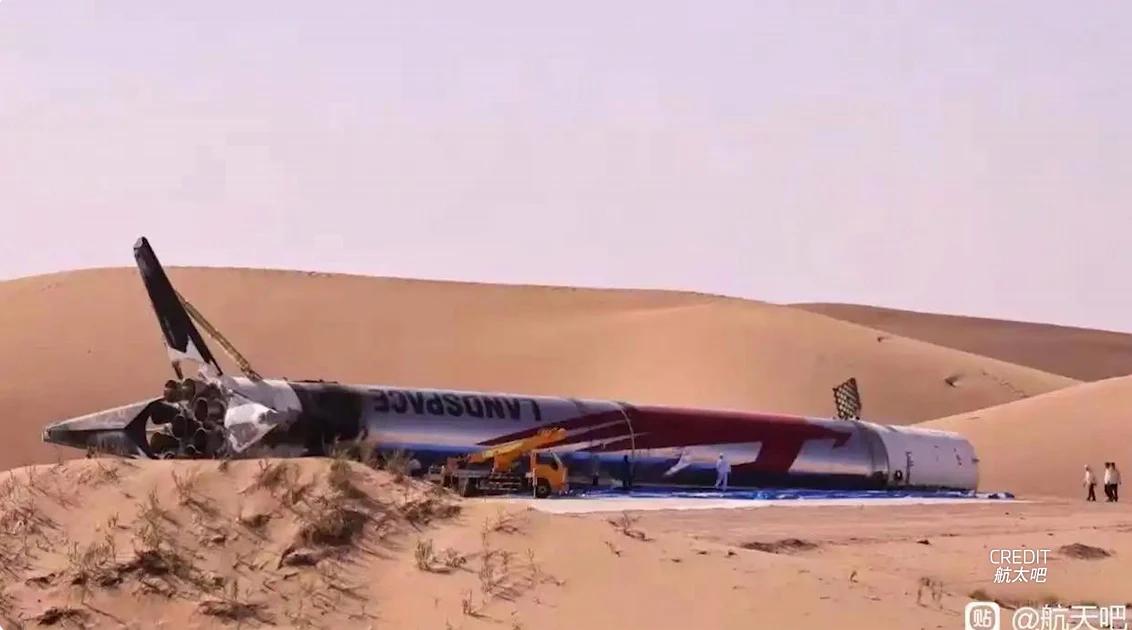
LandSpace's Zhuque-3 first stage soft-landed on a recovery pad in the Gobi Desert following its second orbital flight, marking China's first successful land-based recovery of an orbital-class booster using landing legs. The booster later tipped over after a post-landing fire compromised one of its legs, a reminder that propulsive recovery is only the first step toward operational reusability.
The success built directly on lessons from the December 2025 maiden flight, which reached orbit but suffered anomalous combustion during the landing burn, causing a high-speed impact near the pad. For the Y2 vehicle, LandSpace reduced the number of engines used during the landing burn to improve reliability, enhanced thermal protection, and added predictive landing-point capability to the autonomous safety system.
The Zhuque-3 Y2 lifted off from the Dongfeng Commercial Space Innovation Pilot Zone at the Jiuquan Satellite Launch Center on August 18, 2026, at 23:35 UTC. Powered by nine Tianque-12A methalox engines, the 66-meter stainless-steel vehicle deployed the Honghu-03 communications satellite prototype into low Earth orbit. After stage separation just over two minutes into flight, the booster performed a three-engine re-entry burn near 80 km altitude, used four grid fins for atmospheric guidance, and executed a landing burn beginning several kilometers above the ground. The four landing legs deployed in the final tens of meters, and the stage touched down near the center of the pad roughly 390 km downrange in Minqin County, Gansu Province.
Video and imagery from the recovery site show the booster standing upright immediately after touchdown. Residual liquid methane and liquid oxygen then ignited near the base, producing a fire that damaged one of the reportedly carbon-fiber composite landing legs. The leg failed, and the stainless-steel stage toppled over. LandSpace had not released a detailed statement on the tip-over at the time of writing.
The sequence closely mirrors an incident involving SpaceX's Falcon 9 booster B1086, which landed on the droneship Just Read the Instructions on March 2, 2025, before an off-nominal fire in the aft section damaged one landing leg and caused the booster to tip over roughly 48 seconds after touchdown.
This marked only the second Chinese orbital booster recovery overall, following the Chang Zheng 10B's net catch at sea in July. Zhuque-3 joins Falcon 9, Falcon Heavy, New Glenn, and Chang Zheng 10B as one of the few orbital-class vehicles to demonstrate first-stage recovery, and is the second such vehicle after Falcon 9 and New Glenn to achieve a propulsive landing on solid ground. The landing, even with the subsequent tip-over, advances LandSpace from technology demonstration toward operational reusability. The company noted that the core challenge, controlled propulsive landing from orbital velocity, has been solved, while strengthening landing legs and improving post-landing propellant management and fire suppression are comparatively more straightforward engineering tasks.
The company had previously indicated plans to attempt reflight of a recovered booster within about six months, a timeline now far less likely for this specific vehicle. LandSpace has an upgraded Zhuque-3E planned, featuring enhanced engines, a longer fairing, and roughly doubled payload. Further flights of Zhuque-3 and its contemporaries will show how quickly these systems mature.