DIA Report Finds Russia Developing Satellite Designed to Carry a Nuclear Weapon
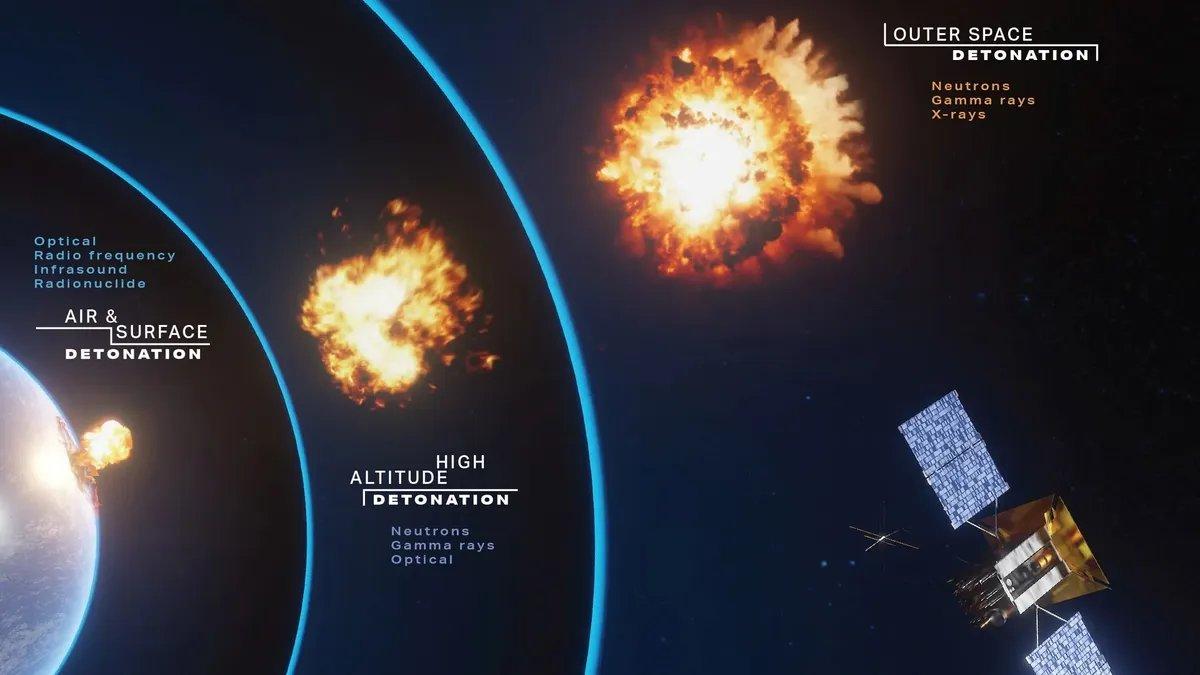
The U.S. Defense Intelligence Agency has concluded that Russia is developing a satellite designed to carry a nuclear weapon, a capability the agency warns could cause the rapid loss or degradation of thousands of satellites worldwide. The finding appears in the 2026 edition of the DIA's unclassified assessment "Challenges to Security in Space," released last month, with information current as of July 2026.
The report is the third iteration of the DIA's public intelligence assessment on space-related challenges to U.S. national security and the extent to which space is treated internationally as a warfighting domain. It focuses on China, Russia, and the emerging space powers Iran and North Korea, examining activity in Earth orbit and in cislunar space, the region between Earth and the moon.
The report's up-front finding is that China, Russia, Iran, and North Korea are developing, testing, deploying, and using space capabilities "in a way that threatens the security of all space systems and their associated space benefits." China and Russia are developing what the DIA calls "a formidable spectrum" of offensive capabilities, ranging from kinetic destruction to jamming and cyber operations. The report identifies key counterspace elements including antisatellite missiles, physical and cyberattacks against ground infrastructure, electronic attacks such as jamming and spoofing, and directed-energy weapons that can temporarily or permanently blind imaging satellites.
On the nuclear finding, the DIA notes Russia is pursuing the capability despite its obligations under the 1967 Outer Space Treaty, which prohibits placing nuclear weapons or other weapons of mass destruction in orbit. "A space-based capability such as this could cause rapid and sudden loss or degradation of thousands of satellites operated by countries and companies around the world," the report states, along with the communications, navigation, scientific, meteorological, commercial, and national security services they provide. A nuclear detonation in space could be tailored to impact satellites in most orbits, from low Earth orbit to medium Earth orbit to geosynchronous orbit.
The report also addresses cislunar space, observing that nations such as China "may be exploring military applications from cislunar space." China has stated a goal of developing a cislunar space economy by 2045 and is the first country to attempt sustained operations on the far side of the moon. "China portrays its interest in cislunar space as peaceful, but PRC officials have also discussed pursuing military capabilities in cislunar space," the report states.
Peter Garretson, a senior fellow in defense studies at the American Foreign Policy Council, said the most significant change from earlier DIA appraisals is the explicit assessment that Russia is developing a satellite designed to carry a nuclear weapon, reflecting concerns in Congress and the Trump White House. Garretson also flagged a consequential omission compared with the 2022 version, the disappearance of prior treatment of research competition, surveillance beyond geosynchronous orbit, and the potential military use of deep space for staging reserve forces. He said China's moves to develop extractive and in-space industries represent "the strategic threat that could crush American space power."
The DIA concluded that space almost certainly will remain an increasingly competitive and crowded environment as space capabilities improve and other countries seize opportunities. Garretson argued the agency needs to help Congress and the public connect how China's activities, from launch cadence and reusable launch to commercial investment and in-space manufacturing, fit into a strategy for comprehensive space dominance.