NASA Begins RS-25 Engine Installation for Artemis III Core Stage
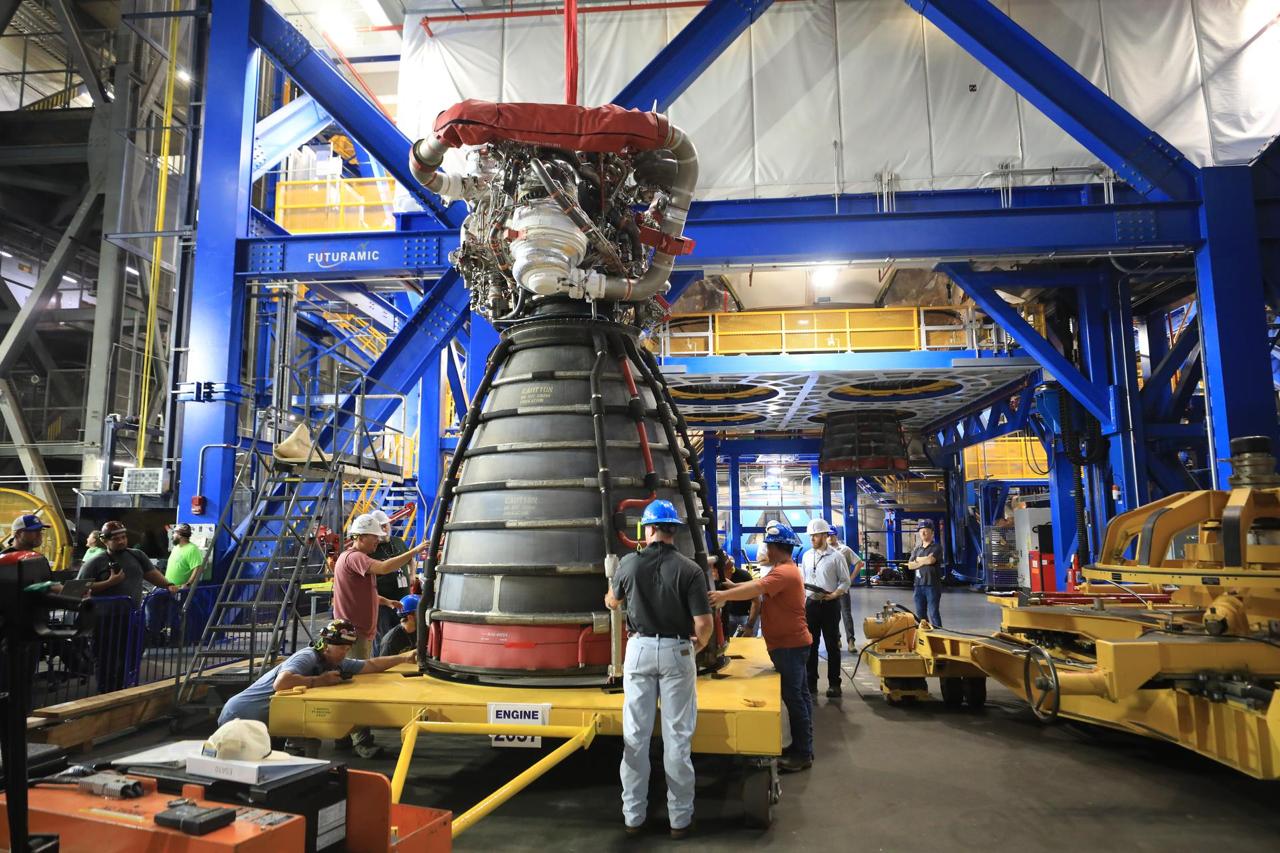
Technicians at NASA's Kennedy Space Center began installing the four RS-25 engines in the core stage of the Space Launch System that will launch the Artemis III crew next year. The milestone, reached August 24, marks the next phase of core stage integration and places flight hardware on the path toward the first crewed lunar landing mission.
The engine installation follows the mating of the engine section to the top four-fifths of the stage earlier this summer. Inside High Bay 2 at the Vehicle Assembly Building, teams will continue installing the remaining engines along with the propulsion and electrical systems throughout the stage.
Each RS-25 engine weighs approximately 7,700 pounds and produces nearly 500,000 pounds of thrust. All four are located at the base of the SLS inside the engine section, which is built to protect them from severe temperatures during launch. During ascent, the engines fire continuously for more than eight minutes, consuming propellant from the core stage's two tanks at roughly 1,500 gallons per second. The four engines assigned to Artemis III, E2054, E2057, E2048, and E2052, previously powered multiple shuttle missions. Engine 2048 helped power NASA astronaut Randy Bresnik's mission on space shuttle Atlantis during STS-129 and also powered Discovery on STS-95 in 1998, the mission that returned Sen. John Glenn to orbit at age 77.
Elsewhere in the VAB, technicians continue integrating the twin solid rocket booster motor segments atop the mobile launcher. Teams began stacking in early July and are now more than halfway complete after streamlining procedures learned from previous Artemis launches. Work on the Orion spacecraft also advances following integration of the crew and service modules. Technicians installed the umbilical connector bridging electrical, data, and fluid systems between the two modules, then powered on the spacecraft for the first time since joining the components to confirm electrical connectivity and subsystem communications.
The Artemis III crew, NASA astronauts Bresnik, Andre Douglas, and Frank Rubio, along with ESA astronaut Luca Parmitano, were assigned on June 9 and have begun an intensive training flow covering Orion systems, science objectives, leadership exercises, and joint training with commercial human landing system providers. Training is organized around ascent, orbit and rendezvous operations, entry, and pre and post-landing readiness. In the Orion mockup at Johnson Space Center, crew members practice daily operations such as mealtime routines using the food warmer and potable water dispenser, and refine camera skills. They recently completed an introductory water survival class and a post-landing emergency exiting course covering splashdown procedures. This week in the Neutral Buoyancy Lab, they donned spacesuits and practiced exiting Orion in an upright configuration, demonstrating use of their Orion Crew Survival System suits, survival hardware, and life raft. The crew also began integrated simulations with the flight control team, including the first session with all four crew members together.
The engine installation represents a tangible manufacturing milestone that places hardware on the critical path for Artemis III, the first planned crewed lunar landing mission. The parallel progress on boosters, Orion, and crew training reflects an integrated push toward launch next year.
Teams will continue installing the remaining engines along with the propulsion and electrical systems throughout the core stage, while booster stacking continues atop the mobile launcher and the crew advances through its training flow toward flight.