NASA Lunar Rovers Advance Toward 2027 and 2028 Moon Base Deadlines
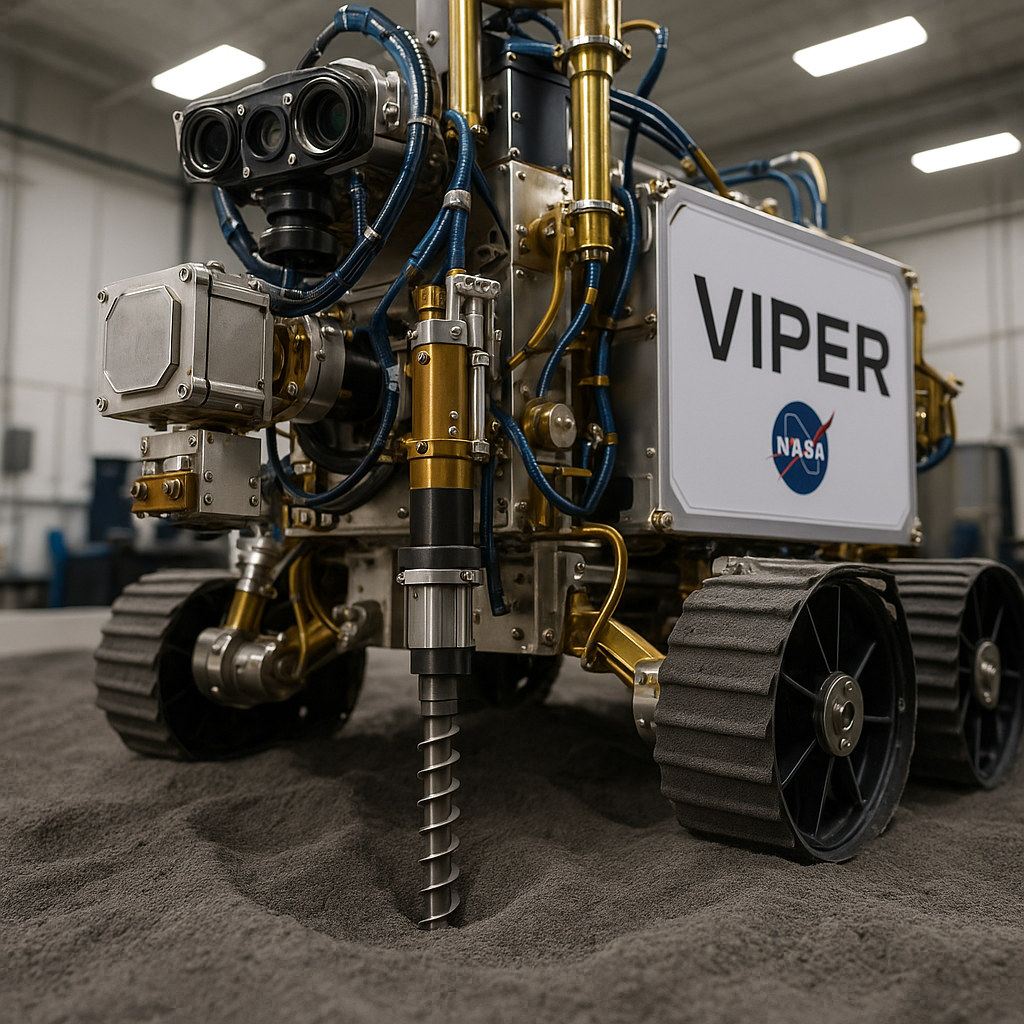
NASA released a progress update on October 20 detailing the state of the crewed and robotic rovers that will enable surface mobility for its Moon Base program. The agency confirmed the VIPER rover is fully built and in final testing, while two commercial lunar terrain vehicles remain on schedule to deliver flight-ready hardware by the end of 2027.
The rovers are central to the early development of the lunar outpost, supporting technology demonstrations, astronaut transport, terrain mapping, scientific investigations, and resource prospecting. Data from these missions will inform the mobility systems and infrastructure required for astronauts to live and work on the Moon.
Robert Pickle, director of the Surface Mobility Office within the Moon Base Program, said lunar rovers are central to NASA's surface mobility strategy. Their performance, he said, will lay the groundwork for mobility systems that define the next era of exploration and ultimately determine how effectively NASA can build, operate, and expand the infrastructure required for long-duration exploration.
NASA's VIPER (Volatiles Investigating Polar Exploration Rover) will travel to the lunar South Pole region in 2027 to venture into permanently shadowed craters in search of water and other resources. After delivery by a Blue Moon Mark 1 lander, VIPER will travel more than 18 miles, collecting data on thermal, lighting, and terrain conditions. The rover is currently at Johnson Space Center in Houston undergoing final testing before shipping to Kennedy Space Center for launch. Mission operations will run out of Ames Research Center in Silicon Valley, where teams are simulating mission scenarios.
NASA awarded Astrolab and Lunar Outpost task orders to build the first phase of crewed lunar terrain vehicles, and awarded Blue Origin a task order to deliver the LTVs to the lunar South Pole region by 2028 through the Commercial Lunar Payload Services initiative. The LTVs will be remotely operated from Earth, traversing up to 3.7 miles per day to produce high-resolution maps before crew arrive. During crewed missions, the vehicles will support up to three moonwalks per Artemis mission, transport up to 176 pounds of samples and tools, and travel up to six miles on a single battery charge. The rovers are designed to function in permanently shadowed regions that can reach minus 334 degrees Fahrenheit.
Astrolab's Crewed Lunar Vehicle 1, adapted from its FLEX architecture, was delivered as a mockup to Axiom Space, where NASA astronauts evaluated its design and interfaces while wearing Artemis lunar spacesuit mockups. Astrolab will first send its robotic FLIP rover to the surface aboard Voyager Technologies' Griffin Mission One, scheduled to launch in late 2026. Lunar Outpost's Pegasus, an evolution of its Eagle LTV, saw a static mockup delivered to Johnson Space Center for crewed testing with pressurized spacesuits. The company's MAPP rover operated at the South Pole in 2025, with a second MAPP scheduled to launch in early 2027.
NASA stated the rovers will support an enduring human presence on the lunar surface, advance scientific discovery, provide economic benefits, and build toward the agency's first crewed mission to Mars.
In the coming weeks, both companies will travel to Glenn Research Center in Cleveland to test their tires in the Simulated Lunar Operations laboratory. Lunar Outpost is scheduled to complete its preliminary design review in October, and Astrolab by the end of December. Both companies are on schedule to deliver flight-ready hardware to NASA at the end of 2027, and will test drivable mockups with NASA crew in the coming months.