NASA Taps SpaceX Starlink to Beam Artemis III Imagery in 4K
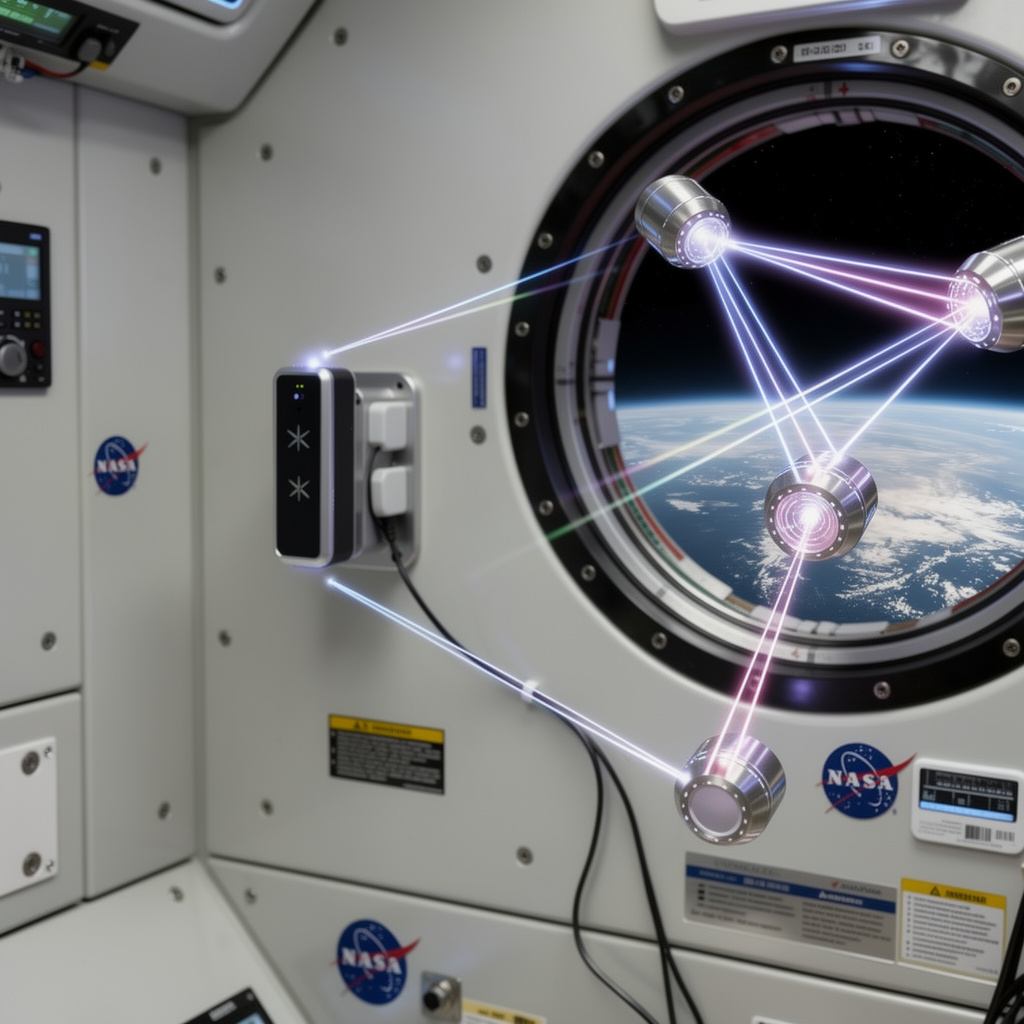
NASA has awarded SpaceX a contract to deliver laser communications capabilities for the Artemis III mission using Starlink, marking another step in the agency's shift from building its own communications systems to buying commercial relay services. The deal will equip the Orion spacecraft with two Starlink mini laser terminals to supplement its existing communications system, delivering 4K imagery and video to NASA's Mission Control Center in Houston.
The award reflects NASA's broader transition away from its Tracking and Data Relay Satellite system, which the agency is slowly retiring. Through its Communications Services Project, NASA is commercializing satellite relay services for near-Earth missions. Optical communications systems use infrared light to transmit higher amounts of data than traditional RF systems.
The two Starlink mini laser terminals use the same crosslink technology as the Starlink constellation, passing data between satellites rather than relying on every satellite having a ground station in sight. That architecture differs from Artemis II, which used the spacecraft's own laser terminal to transmit HD videos, photos, and other data directly to ground when Orion had line of sight with ground terminals. While NASA described the Artemis III work as a commercial relay demonstration, it did not detail exactly how Orion's data will reach the ground.
This is not SpaceX's first communications work with NASA. During Fram2, the company's 2025 private mission that became the first crewed flight in polar orbit, SpaceX demonstrated laser communications capabilities under an agreement with the agency. Beyond Artemis, the company has used Starlink to provide real-time flight video and telemetry data during its Starship flight tests. The laser communications capabilities will allow the world to tune in as astronauts test rendezvous and docking operations between Orion and the landers set to bring astronauts to the surface on future Artemis missions, including SpaceX's own Starship HLS and Blue Origin's Blue Moon lander. A ship-to-ship transfer in low Earth orbit is planned for 2027.
The Starlink contract is separate from SpaceX's role as the human landing system provider for Artemis III. With this award, SpaceX is now embedded in the mission at multiple levels, providing both the human landing system and the communications relay. The company also builds the Falcon Heavy that could launch elements of the mission. NASA characterized the Starlink award as a small but revealing example of the agency's move from building its own communications systems to purchasing them commercially.
What to watch: Artemis III is currently planned for 2027, when astronauts will test rendezvous and docking operations between Orion and the landers intended for future lunar surface missions.