NASA Study Finds Human Microbes Could Survive in Shadows of Moon's South Pole
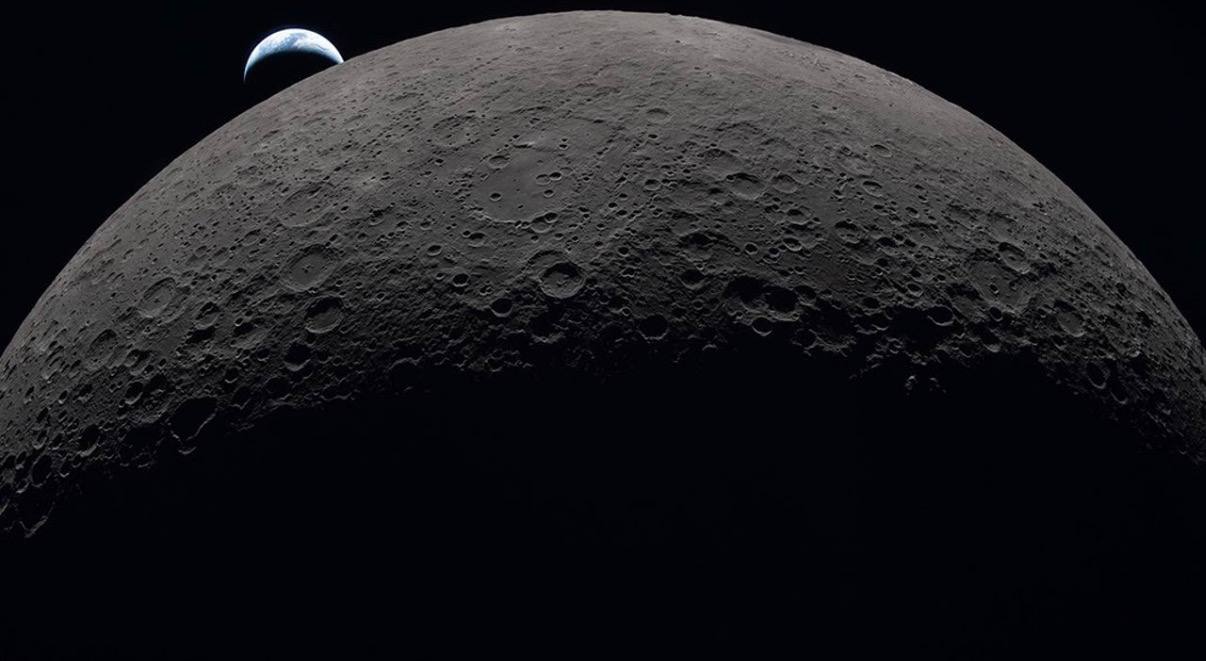
Some Earth microbes carried to space by astronauts could survive in the shaded regions of the Moon's South Pole, NASA scientists have found. Published August 19, 2026, in Science Advances, the findings warn that microbial contamination could make it difficult to distinguish ancient lunar chemistry from material delivered by visiting crews, a concern that extends to Mars.
As humans build a permanent presence on the Moon, the study's authors say it may become hard to separate genuine lunar signals from contamination. Bringing microbes along is unavoidable. Humans carry, on average, 1 million bacteria on each patch of skin the size of a pencil eraser, and these bacteria vent from spacesuits and habitats. The authors argue that while contamination could interfere with the search for chemical clues to ancient geology or biology, the Moon could also serve as a natural laboratory to test the real limits of microbial survival in an environment that cannot be reproduced on Earth.
The team, led by planetary scientist Prabal Saxena of NASA's Goddard Space Flight Center, selected five microbes for the study, including bacteria and fungi. Alongside Aspergillus niger, a fungus known for its toughness in spaceflight environments, the group tested Bacillus subtilis, Staphylococcus aureus, Deinococcus radiodurans, and several species of Fusarium. Astronauts have sampled Aspergillus niger inside the International Space Station, and experiments show it can survive outside the station as well. Survival in the study means a microbe can stay alive for at least one Earth day, not that it can grow and reproduce.
The organisms were tested in simulations of three regions near the lunar South Pole, Nobile Rim, Connecting Ridge, and De Gerlache Rim. Those simulations used environmental maps built from elevation and temperature data collected by NASA's Lunar Reconnaissance Orbiter, combined with models of how radiation strikes the surface. Because the Moon has a very small axial tilt, sunlight at the poles skims just above the horizon, allowing crater ridges, mountains, and even small bumps to cast shadows that remain cold and shield fragile molecules from lethal radiation. The models produced maps of survivable niches ranging in size from a miles-wide crater floor to an astronaut's boot print. Aspergillus niger, the most resistant to ultraviolet radiation, survived even in areas with some sunlight exposure.
"We need to understand what was there before us, because when we go to Mars to search for signs of life beyond our planet, we will want to make sure it's not stuff we brought," said Andrew Needham, a NASA Goddard Artemis contamination-control scientist for lunar samples and a co-author. Co-author Heather Graham said the Moon is a place where a cell can survive, so early exploration of these sites should characterize lunar chemistry before visits change what will be found. The authors note there is no evidence the Moon has the ingredients, such as liquid water, needed to sustain microbial growth and replication.
The authors say scientists need a baseline measurement of what contaminants humans bring before any surface science can proceed. NASA has designated September 19, 2026, as International Observe the Moon Night, when observers worldwide will study Earth's Moon through direct observations and activities.