Roman Space Telescope Set for August 30 Falcon Heavy Launch, Eight Months Ahead of Schedule
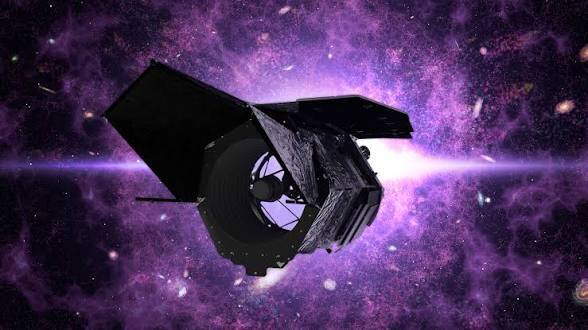
NASA's Nancy Grace Roman Space Telescope is scheduled to lift off at 7:20 a.m. on August 30 aboard a SpaceX Falcon Heavy from pad 39A at Kennedy Space Center. The 42-foot-long observatory is designed to image more than 50 times as much sky in its first five years as the Hubble Space Telescope covered in 30 years, a scale scientists say will surface discoveries no telescope has captured before.
The mission aims to study dark energy, dark matter, and new cosmic phenomena by imaging millions of galaxies, billions of stars, and thousands of supernovae. The August 30 date is eight months ahead of schedule. The telescope is named for Nancy Grace Roman, NASA's first chief astronomer, credited as the "mother" of the Hubble telescope, which launched in April 1990 aboard space shuttle Discovery during the STS-31 mission.
After launch, the 18,000-pound telescope will spend roughly three months traveling to the second Sun-Earth Lagrange point, nearly 1 million miles from Earth, the same orbit occupied by the James Webb Space Telescope. Jeremy Perkins, Roman telescope integration and test scientist at NASA's Goddard Space Flight Center, said the observatory should enter its orbit in December, on Day 100 of the mission. He described the Lagrange point as a balance-point "sweet spot" in the gravitational tug-of-war between the sun and Earth. "The reason we go out there is because it's really quiet and dark. And we don't have to worry about getting blocked by the Earth when we're in orbit," Perkins said.
The telescope carries a coronagraph and a Wide Field Instrument, a 300-megapixel infrared camera with a field of view at least 100 times larger than Hubble's. NASA's press kit notes the instrument will perform surveys "that would take Hubble hundreds or even thousands of years." L3Harris Technologies workers in Rochester, New York, designed and built Roman's primary mirror, which spans 7.9 feet across.
Perkins said the mission will generate 1.4 terabytes of data a day. "The baseline science is great. I mean, we're trying to understand the universe, which is not a small question. But what really excites me is the stuff we don't know about," he said. "When you have a data set that's as big as Roman, people are going to be finding things that we have just never seen before that are unique. And we're going to find one-in-a-million things over and over and over again."
Roman data will downlink to ground stations in New Mexico, Australia, and Japan. NASA will release data to the public as soon as it is processed so many teams can analyze it simultaneously. According to the mission plan, Hubble could follow up on interesting targets within Roman's panoramas using infrared, visible, and ultraviolet light, conducting studies that only Hubble can currently do.
NASA will hold a virtual news conference on the Roman telescope mission at 2 p.m. on Wednesday, July 29. Following the August 30 launch, the telescope is expected to reach its orbit and begin observations in December.