Rocket Lab Wins $266 Million Space Force Deal for 12 Suborbital Launches, Anchored by New Alaska Site
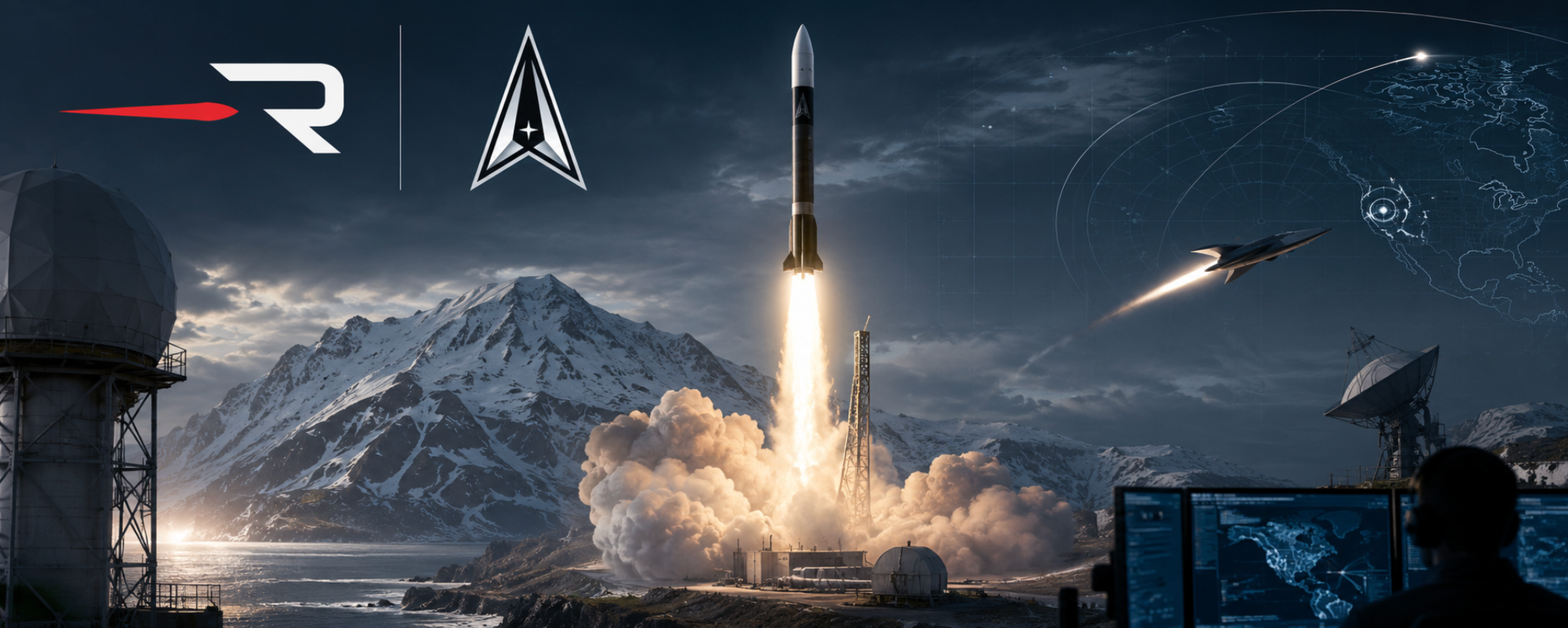
Rocket Lab has won a $266 million U.S. Space Force contract to conduct 12 suborbital launches over the next three years, with options for six additional missions.
The USSF award is the largest launch contract in Rocket Lab's history and will establish a new company launch location at the Pacific Spaceport Complex-Alaska in Kodiak. The contract was awarded through Space Systems Command's Rocket Systems Launch Program, or RSLP, which procures launch services for experimental, research and national security missions. Rocket Lab said the first mission under the contract is expected no earlier than the end of 2026, while the Pentagon lists contract performance through December 31, 2028.
Most of the launches will take place from Rocket Lab's new location at the Pacific Spaceport Complex-Alaska, adding Kodiak to a launch network that already includes the company's private Launch Complex 1 in New Zealand and its Launch Complex 2 and developing Launch Complex 3 in Virginia.
The contract represents a significant expansion of the company's national security launch business. The Pentagon classified the award as a firm-fixed-price contract and said three offers were received in the competitive procurement. Approximately $112 million in research, development, test and evaluation funding was obligated at the time of the award. While Rocket Lab has not publicly identified the vehicle that will conduct the new missions, the company has built a growing defense business around HASTE, its suborbital rocket designed for hypersonic and missile-defense testing.
HASTE, short for Hypersonic Accelerator Suborbital Test Electron, is derived from Rocket Lab's Electron orbital rocket but uses a modified upper stage designed to place experimental payloads on customized suborbital trajectories. The vehicle can carry payloads weighing up to approximately 700 kilograms and release them at velocities ranging from roughly 3 kilometers per second to more than 7.5 kilometers per second.
Those capabilities allow HASTE to recreate flight conditions relevant to ballistic missiles, hypersonic glide vehicles, air-breathing hypersonic systems and vehicles reentering Earth's atmosphere from space. Rather than placing a satellite into orbit, the rocket can deliver test articles onto precisely designed high-speed trajectories, allowing military customers to test sensors, interceptors and other technologies against increasingly realistic threats.
The new Space Force award follows a rapid expansion of Rocket Lab's hypersonic launch backlog. In March, Rocket Lab secured a $190 million contract to provide 20 HASTE launches over four years for the Pentagon's Multi-Service Advanced Capability Hypersonic Test Bed 2.0, or MACH-TB 2.0, program. The program is intended to increase the frequency at which the U.S. military can conduct hypersonic flight tests, an area where limited access to test ranges and launch vehicles has historically slowed development. In May, Anduril awarded Rocket Lab another $30 million contract for three HASTE missions from Wallops Island, Virginia, adding privately funded hypersonic testing to the company's government work.
The $266 million Space Force contract pushes that expansion further. If all six options are exercised, the program could eventually encompass 18 suborbital launches in addition to the 20 MACH-TB missions and other HASTE flights already under contract.
The choice of Alaska is also significant. Instead of relying exclusively on Rocket Lab's existing HASTE infrastructure in Virginia, the company will establish a dedicated presence at the Pacific Spaceport Complex-Alaska. Kodiak provides access to a large Pacific downrange area that can support the long flight corridors required for missile, reentry and hypersonic testing.
The new location also gives the Pentagon greater geographic diversity for high-cadence suborbital testing. As the U.S. expands development of hypersonic weapons, missile interceptors and next-generation sensing systems, access to launch ranges has become an important constraint alongside the production of the vehicles themselves.
For Rocket Lab, the Alaska expansion is part of a broader move deeper into national security. The company has moved well beyond its original role as a commercial small-satellite launch provider. Electron continues to perform orbital missions for U.S. government customers, while HASTE targets missile defense and hypersonic testing. Rocket Lab is also developing the larger Neutron rocket for medium-lift missions, including future national security launches.
Rocket Lab has already been admitted to the Space Force's National Security Space Launch Phase 3 Lane 1 contract pool, making the company eligible to compete for future orbital launch task orders alongside providers including SpaceX, United Launch Alliance, and Blue Origin. That makes the latest contract strategically important beyond its $266 million value.
HASTE gives Rocket Lab a platform for testing technologies that may eventually interact with space-based missile warning and tracking systems, including the growing constellation of military satellites being deployed to detect ballistic and hypersonic threats. At the same time, Electron and eventually Neutron provide Rocket Lab with paths into increasingly valuable orbital national security missions.
The company is therefore developing a launch portfolio spanning both sides of the atmosphere: suborbital hypersonic and missile-defense testing through HASTE, small orbital missions through Electron and, if development proceeds as planned, larger national security payloads through Neutron.
The Pentagon's decision to procure as many as 18 launches under a single contract also reflects a broader shift toward higher-frequency testing. Hypersonic and missile-defense programs require repeated flight tests to develop new vehicles, sensors and interceptors, creating demand for launch providers capable of producing rockets and flying missions at a sustained cadence.
Rocket Lab CEO Peter Beck pointed directly to that requirement following the award, saying that cadence and rapid iteration are increasingly important to the development of U.S. missile-defense capabilities.
The first launch under the contract is expected no earlier than the end of 2026. Beyond the initial missions, one of the most important developments to watch will be whether Kodiak becomes a permanent hub for Rocket Lab's suborbital defense business. If it does, the Alaska site could become another piece of a growing national security launch network as Rocket Lab attempts to establish itself across hypersonic testing, responsive space launch and eventually larger U.S. military orbital missions.
For Rocket Lab, the $266 million award is therefore more than a block purchase of suborbital launches. It is another step toward becoming a broader launch and defense supplier to the U.S. military, with HASTE, Electron and Neutron addressing increasingly distinct parts of the national security space market.