Atomic-6 Space Armor Tiles Reach Orbit for First Time Aboard Portal's Starburst-1
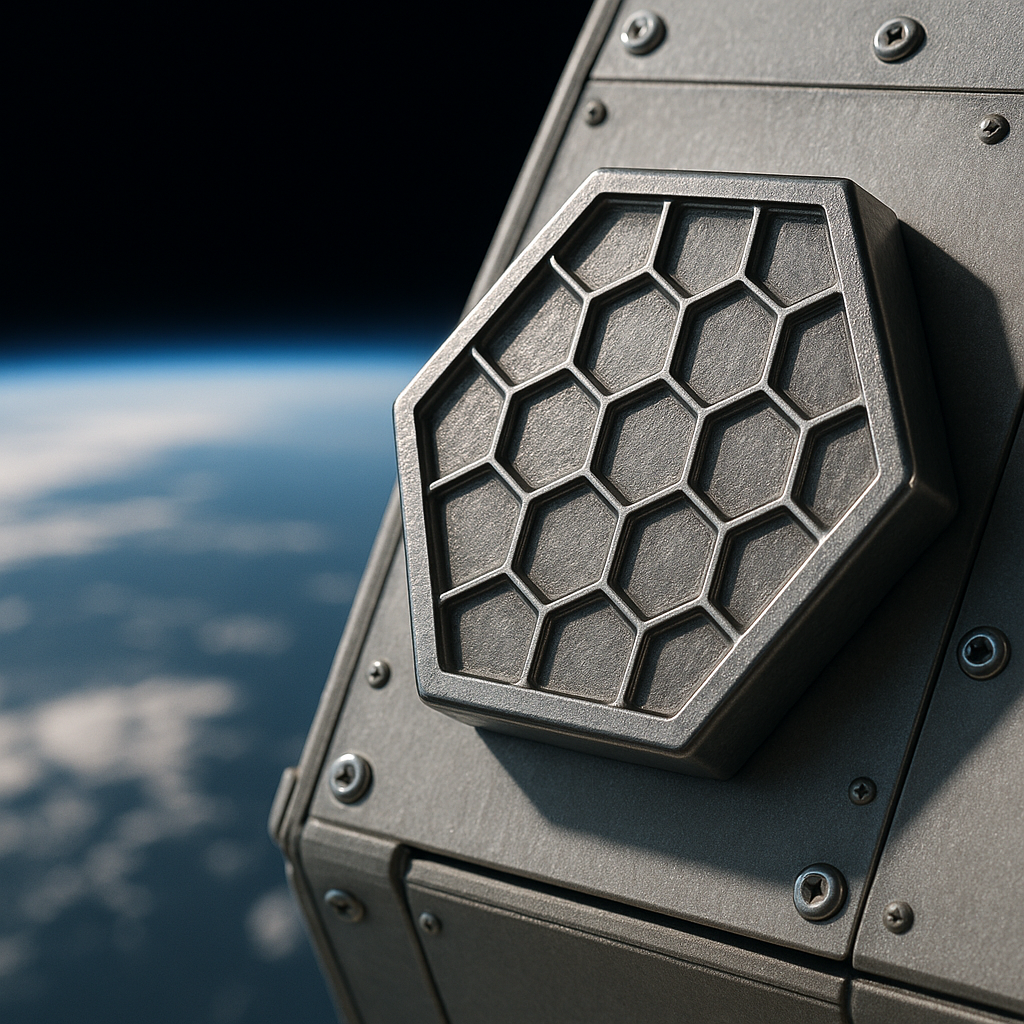
Atomic-6 has launched its Space Armor composite shielding technology into orbit for the first time, carried aboard Portal Space Systems' Starburst-1 spacecraft. The flight moves the micrometeoroid and orbital debris protection system from ground-based hypervelocity testing to its first operational deployment, a milestone the company says demonstrates a lighter alternative to traditional metallic shielding.
The launch took place on October 21, 2026, from Cape Canaveral, Florida, aboard a SpaceX Falcon 9 rocket as part of the Bandwagon-5 dedicated rideshare mission. The Space Armor tiles are designed to protect critical spacecraft systems against potentially catastrophic impacts from micrometeoroids and orbital debris, a problem tied to concerns over the Kessler Syndrome, the cascading effect of debris collisions that could render parts of Earth's orbit unusable for satellites or missions.
Built with a proprietary fiber-to-resin manufacturing method, the tiles also form what Atomic-6 describes as the first composite radome, a structural enclosure that protects communication equipment while offering both communications transparency and impact resilience. Unlike traditional metallic Whipple shields, the tiles are lighter, thinner, and engineered to resist fragmentation upon impact, reducing the risk of creating additional hazardous debris.
In ground-based hypervelocity testing, Space Armor composite tiles stopped projectiles traveling faster than 7 kilometers per second, roughly 16,000 miles per hour, while producing no harmful secondary debris. In comparative testing, conventional aluminum shielding generated numerous fragments, some larger than the original projectile. "We've proven Space Armor tiles can withstand debris traveling at extraordinary speeds without generating harmful secondary fragments," said Trevor Smith, CEO of Atomic-6. "Now, we're putting that technology to work aboard Portal's Starburst-1, taking an important step toward scaling its deployment and making space safer and more sustainable."
Starburst-1 is Portal's first free-flying spacecraft mission carrying live payloads, with Space Armor tiles installed on the vehicle. Designed for rapid maneuvering within an orbital regime, Starburst-1 will demonstrate rendezvous and proximity operations, rapid retasking, and significant orbital changes during its planned one-year primary mission. Jeff Thornburg, co-founder and CEO of Portal Space Systems, said protecting spacecraft from orbital debris matters to the company and its customers. "Space Armor has the potential to add valuable protection to spacecraft while not affecting or hindering the performance our missions demand," he said. "Seeing the first tile reach orbit is a milestone deserving of celebration, and we're proud to have been the vehicle to get them there."
The companies say the technology's combination of impact resistance, reduced mass, and RF permeability offers spacecraft manufacturers a new approach to protecting high-value orbital assets, including satellites, communications systems, and future crewed platforms. Smith framed the deployment as a step toward scaling the technology and improving the sustainability of operations in orbit.
Portal and Atomic-6 will use experience from integrating Space Armor tiles onto Starburst-1 to validate installation procedures and develop best practices for incorporating the tiles into future spacecraft designs. The Starburst-1 mission carries a planned one-year primary duration.