NASA Backs AstraQua's Robot Self-Awareness Tech With $1.27 Million Contract
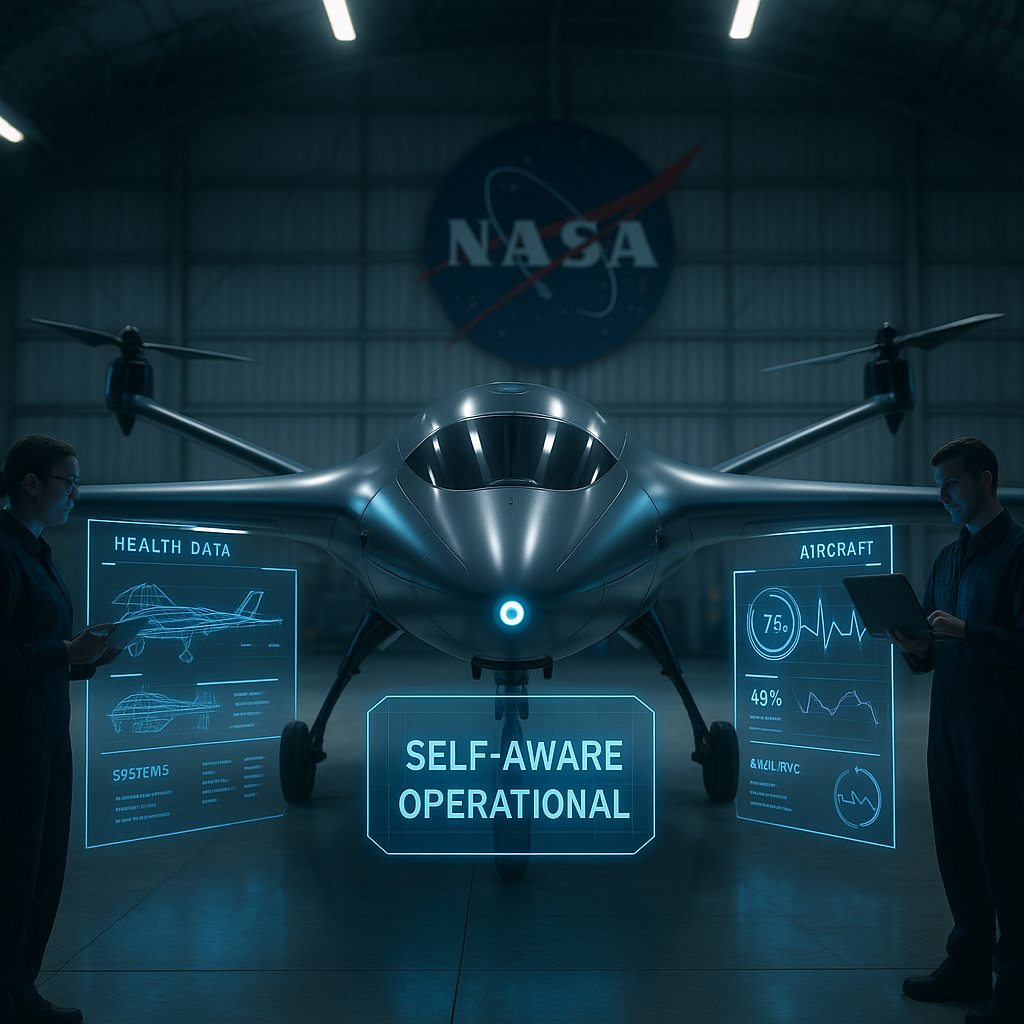
NASA has awarded AstraQua Inc. a $1,274,990 Phase II contract to advance its AstraSense technology for electric and hybrid-electric aircraft, including advanced air mobility applications. The award supports AstraQua's effort to give autonomous systems predictive health and operational self-awareness, a capability the company describes as teaching robots to feel pain.
The Phase II work builds on earlier demonstrations delivered to NASA. In Phase I, AstraQua showed real-time diagnostics and predictive-health capabilities, and the technology already runs on robotic hardware. As autonomous vehicles increasingly fly over populated areas, their ability to understand and respond to their own health becomes critical to safe operation.
AstraSense is powered by AstraQua's Agentic Physical AI, called the Adaptive Quorum Foundation Model. The Phase II effort advances aircraft integration and health-informed reasoning, with verification and validation for safety-critical applications. The goal is to help machines use their own health information to decide whether to continue a task, adapt or stop.
"A robot should know when to slow down, not just when it has broken down," said Loay Elbasyouni, founder and CEO of AstraQua. "That's what we mean by teaching robots to feel pain: using their own health to make better, safer decisions in real time." For AstraSense, self-awareness means understanding the condition of a machine's own systems, and when machines work together, sharing health information can help inform decisions across the group.
The technology sits within AstraQua's broader software brain, which is designed to connect perception, onboard reasoning and collaboration across different types of robots. The company compares the concept to a robot calling in sick: when its condition limits its ability to work, the team recognizes the change and assigns suitable unfinished tasks to another capable machine. In an industrial inspection scenario, drones could survey a site while ground robots inspect equipment, and if one ground robot needs to stop, another suitably equipped robot could take over its remaining tasks while the drones continue. AstraQua's approach emphasizes low-power onboard intelligence, reduced dependence on continuous cloud connectivity, and decisions that account for each machine's health and operating limits.
Elbasyouni led electrical and power-electronics work supporting NASA's Ingenuity Mars Helicopter, the first aircraft to achieve powered, controlled flight on another planet, and later led rocket-engine avionics at Blue Origin. He was named among LA Times Studios' 2026 Aerospace and Defense Business Visionaries.
AstraQua frames the NASA-funded aircraft work as advancing AstraSense within a broader effort to help autonomous systems work together. The company states the aim is to help mixed teams of robots adapt and complete a shared mission, giving machines the ability to account for their own condition and operating limits when making decisions.
AstraQua, which develops Agentic Physical AI for autonomous machines across air, land, sea and space, has operations in California and Kentucky. The Phase II contract focuses on advancing aircraft integration and health-informed reasoning, along with verification and validation for safety-critical applications.