Eight Globalstar Satellites Pass On-Orbit Tests, Clearing a Condition of Amazon's $11.57 Billion Buyout
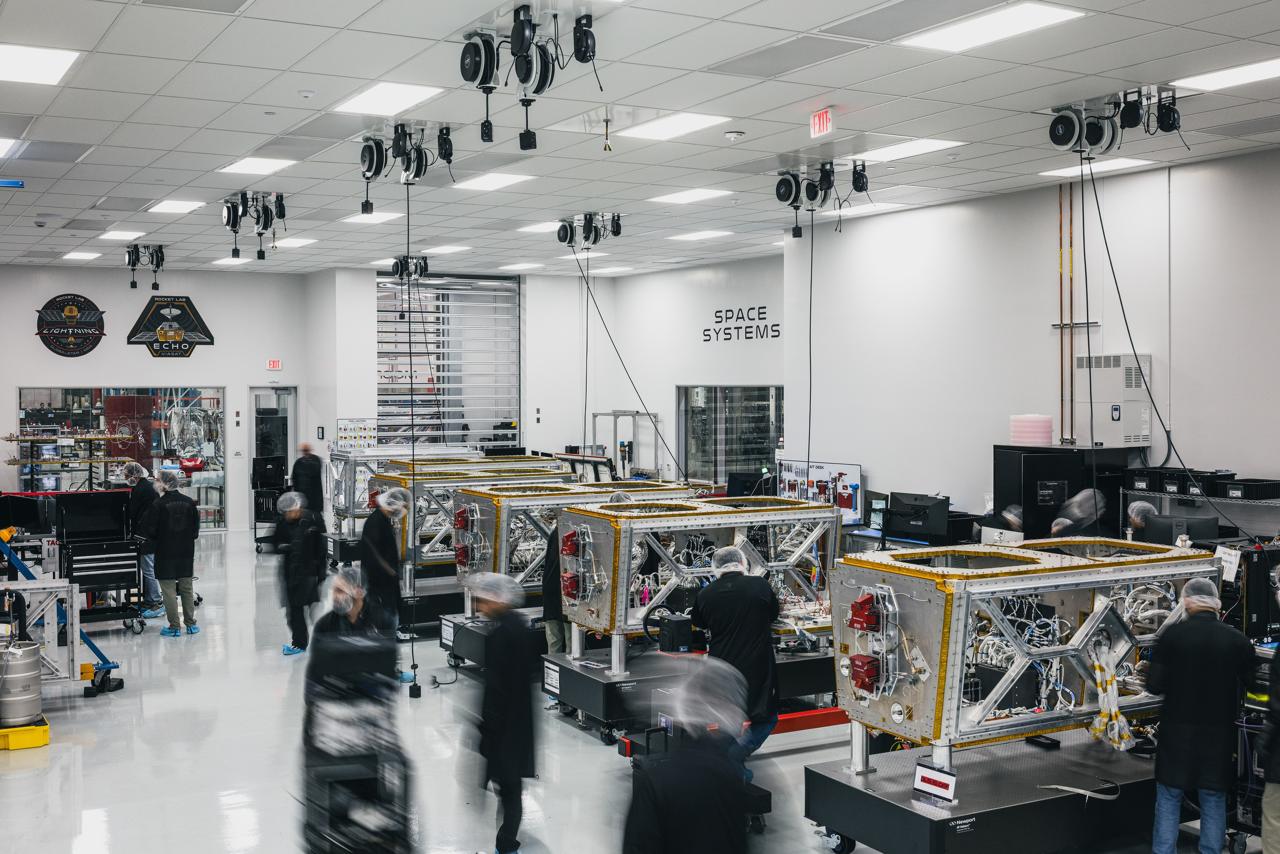
Eight next-generation Globalstar satellites have passed their initial on-orbit functional tests, MDA Space confirmed this week, clearing them to begin raising their orbits toward operational altitude. The milestone satisfies one of the deployment checkpoints written into Amazon's $11.57 billion acquisition of Globalstar, the largest satellite transaction announced this year, and it concerns the network that powers Apple's Emergency SOS via satellite feature.
The spacecraft launched on August 15 aboard a SpaceX Falcon 9 and have spent nearly three months in commissioning. The announcement marks the formal transition from early commissioning to active orbit raising and deeper payload testing. These satellites form the next generation of Globalstar's HIBLEO constellation, the network behind Apple's Emergency SOS feature, which has been credited with enabling over a thousand emergency rescues since its November 2022 launch on iPhone 14 and later models.
In April 2026, Amazon announced it would acquire Globalstar for approximately $11.57 billion, a deal structured to fold Globalstar's spectrum licenses, orbital slots, and ground network into Amazon Leo. The deal is expected to close in 2027, pending regulatory approvals. Its terms include explicit conditions tied to Globalstar meeting satellite constellation deployment milestones, and the commissioning results announced Monday are among those checkpoints. The terms also preserve the existing arrangement reserving approximately 85 percent of Globalstar's network capacity for Apple's Emergency SOS service. The FCC spectrum license transfer required by the acquisition remains pending, with no adverse regulatory signals as of this writing.
The eight spacecraft currently sit at a parking altitude of roughly 680 to 695 kilometers at approximately 52 degrees inclination. Their operational destination is approximately 1,414 kilometers within the HIBLEO constellation. Bridging that roughly 720-kilometer gap is the task of Hall-effect thrusters on the Rocket Lab Lightning satellite buses that make up the platform. The electric propulsion is continuous, solar-powered, and far more propellant-efficient than chemical thrusters, though the tradeoff is time, with orbit raising taking weeks to months. The first two satellites have begun their climb while the remaining six undergo additional payload and bus testing as their orbital planes come into alignment.
For MDA Space, the Globalstar 2-R contract is the first time the Canadian manufacturer has delivered LEO satellites as prime contractor for a commercial communications constellation. Rocket Lab built the 17 Lightning bus platforms under a $143 million manufacturing agreement, and the full Globalstar-MDA prime contract is valued at approximately $415 million. The path was not without friction, as Globalstar imposed liquidated damages on MDA for delivery delays that pushed the launch from its original schedule.
The 2-R mission is a refresh rather than an expansion, designed to replace aging hardware and extend the constellation's operational life as direct-to-device demand grows. MDA CEO Mike Greenley said that, as prime contractor for the constellation, "our full focus remains on continued execution and the delivery to our customer." For iPhone users with an iPhone 14, 15, or 16, the practical implication is continuity, with Emergency SOS remaining fully operational during the transition and the new satellites on a path intended to strengthen long-term reliability.
Attention now shifts to the second half of the 17-satellite order. Final integration for the remaining nine spacecraft has recently been completed at MDA's facility in Montréal, Quebec, putting them on the threshold of launch readiness. No launch date for the second batch has been set, and the FCC spectrum license transfer remains the outstanding regulatory step before the Amazon deal can close in 2027.