SpaceX Targets First Double Catch of Starship and Super Heavy on Flight 15
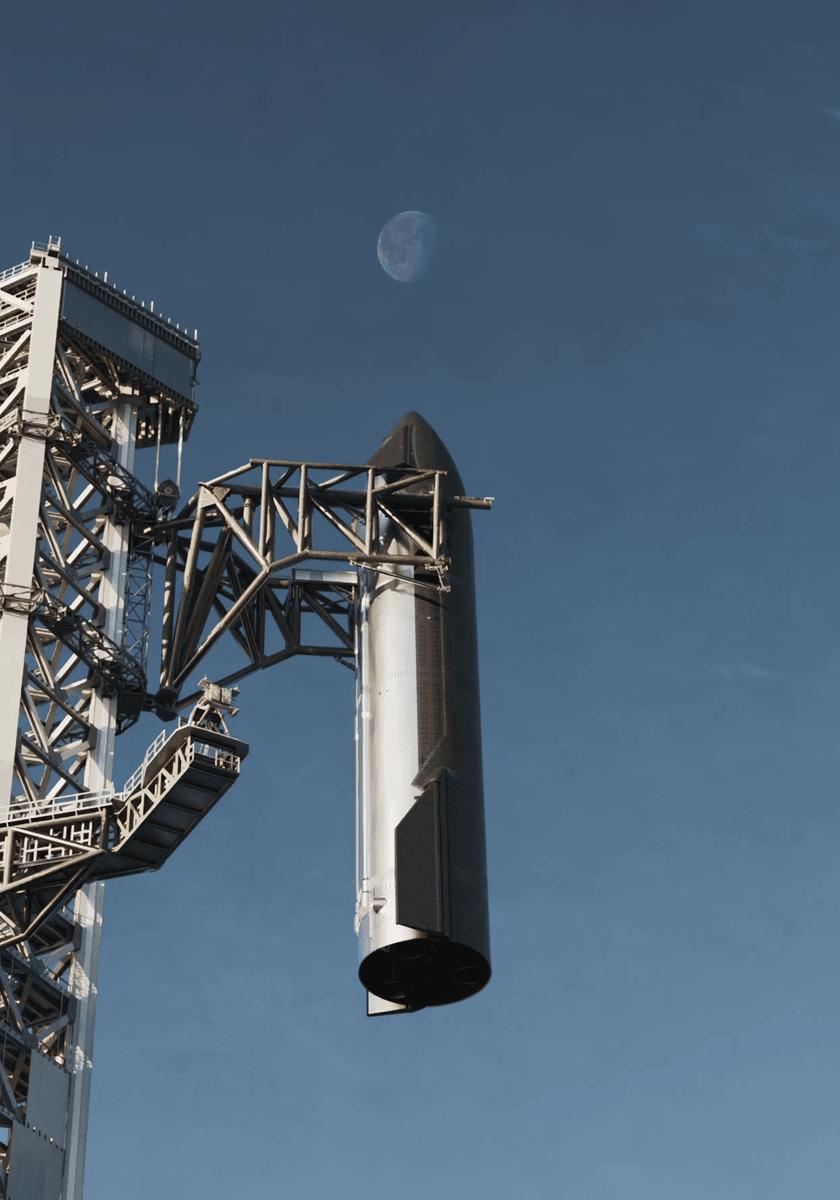
SpaceX plans to catch both the Starship upper stage and its Super Heavy booster at the launch tower during Flight 15, which could fly as soon as Friday, November 13, pending regulatory approval. The 75-minute launch window opens at 4:45 p.m. CT, 5:45 p.m. ET. SpaceX says catching both stages would mark the first full recovery of an orbital launch system.
The flight follows Flight 14 in September, when Starship reached orbit for the first time and delivered Starlink satellites to the network. On that mission, the booster splashed down off Starbase rather than returning to the tower.
Mechazilla, the launch tower at Starbase, will catch the booster about six and a half minutes after liftoff, closing a pair of mechanical arms known as chopsticks around the booster as it slows alongside. It will be the first catch attempt for the third version of Super Heavy, known as V3, staged at the tower as Booster 22 with 33 Raptor engines. SpaceX has caught three first-version boosters on earlier test flights and flown two of them again.
The ship's return might not come until almost a day later. SpaceX said it will only bring the ship back to the launch site if controllers confirm that the systems needed for re-entry, the final landing burn and the approach to the tower are healthy. The flight plan sets out several return checks, starting about an hour and a half after liftoff. At each one, controllers can bring the ship down safely over the ocean. That approach was tested on Flight 14, when one of Ship 41's six Raptor engines shut down early during the climb to orbit and controllers held for about 20 minutes before clearing it to continue.
Flight 15 is planned to circle Earth about 14 times over more than 22 hours. Flight 14 had been planned for six orbits. Starship will again carry 26 Starlink V3 satellites, the same load Ship 41 released in September. SpaceX says each V3 satellite will add one terabit of capacity, and that a full load matches about 10 Falcon 9 launches of the older V2 Mini satellites. The satellites could begin serving customers a few weeks after launch. Three of the satellites carry cameras to photograph Starship's heat shield from orbit, as on Flight 14.
SpaceX says catching both stages would mark the first full recovery of an orbital launch system. The mission also targets reaching orbit, as on the previous flight.
Flight 15 could fly as soon as Friday, November 13, pending regulatory approval. The heat shield keeps the fixes made for Flight 14, including extra retention on the tiles most likely to fall off during ascent and closed gaps where plasma could get behind tiles. The change for Flight 15 is a curved tile design across a large portion of the shield, which SpaceX says has reduced heating in the gaps between tiles. Controllers can still end the mission early at set points over the ocean if the return checks are not met.