American Airlines To Outfit 500+ Aircraft With Starlink
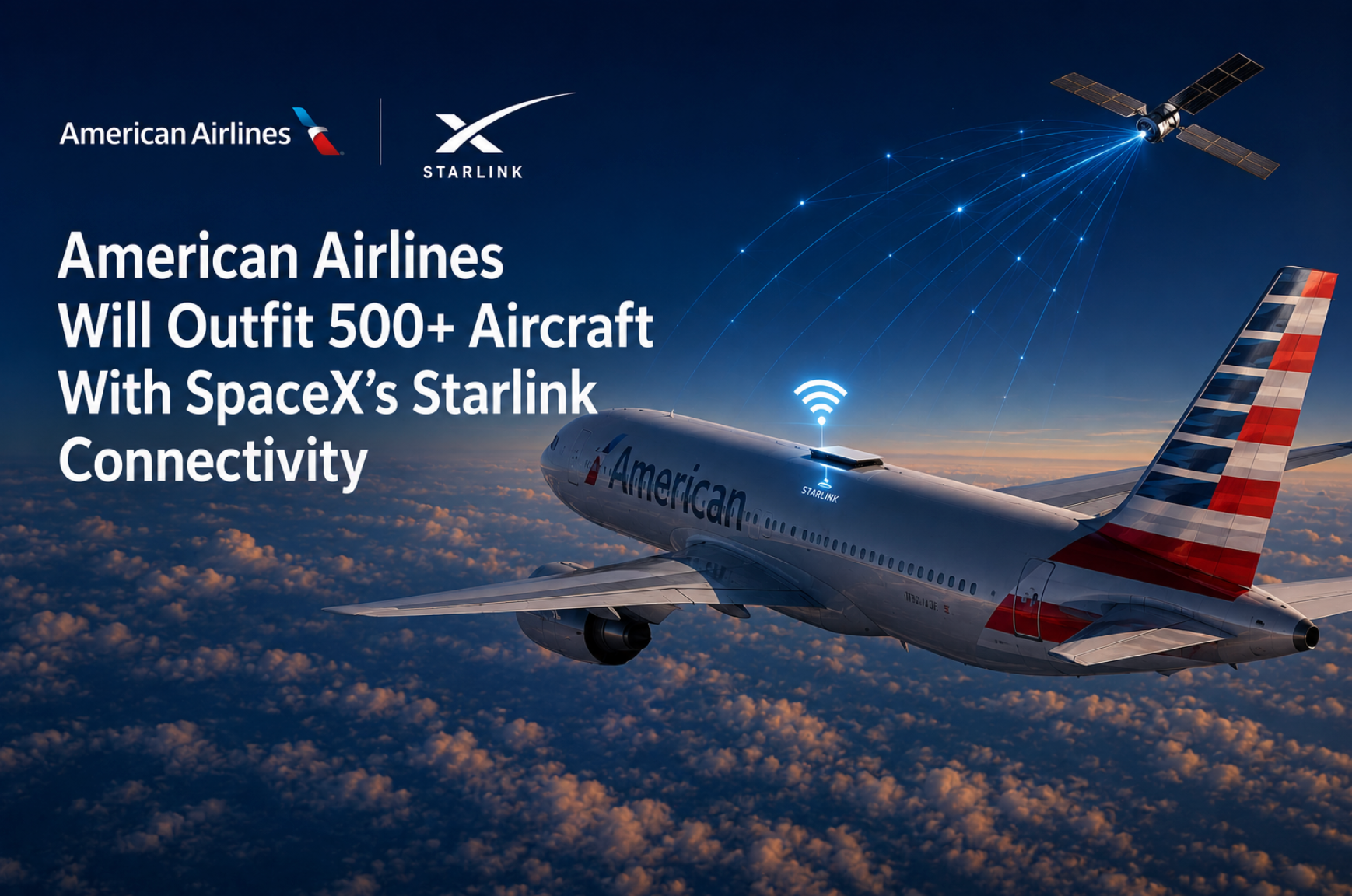
American Airlines announced it will install SpaceX's Starlink satellite internet on more than 500 narrowbody aircraft, beginning deployment in the first quarter of 2027. The move makes American the third major U.S. carrier to adopt the service, following Delta Air Lines and United Airlines, cementing SpaceX's control over premium in-flight connectivity across most of the nation's largest airlines.
The decision positions SpaceX to dominate a market historically fragmented among ground-based and satellite providers. With the three largest carriers now committed to Starlink, the company has secured the backbone of U.S. domestic and international aviation connectivity before its planned public offering. Traditional providers including Viasat and Intelsat face shrinking addressable markets as airlines standardize on the newer satellite constellation.
American's fleet affected by the agreement includes newly delivered Airbus A321neo and A321XLR aircraft, along with additional narrowbody jets in its existing inventory. The carrier operates one of the world's largest Airbus fleets and maintains extensive domestic and transatlantic networks where reliable connectivity has become a competitive necessity. Installation will occur during scheduled maintenance checks, avoiding production disruptions. American did not disclose financial terms.
The announcement came May 26, just weeks after SpaceX filed its S-1 registration statement with the Securities and Exchange Commission, signaling preparation for a public market debut. Delta Air Lines began offering Starlink to passengers in 2024, while United announced plans to equip its narrowbody fleet in early 2025. Both carriers framed the service as a differentiator in an increasingly competitive market where business travelers and leisure passengers expect uninterrupted connectivity.
SpaceX's Starlink Aviation service delivers low-latency satellite broadband through terminals designed and integrated specifically for aviation applications. Unlike previous satellite-based in-flight systems that depended on aging satellite fleets with limited capacity, Starlink's expanding constellation provides greater bandwidth and redundancy. The service eliminates dependency on ground-based cellular networks and ATCs air-to-ground systems that degrade over water and remote regions.
The competitive implications extend beyond connectivity. Airlines investing in Starlink gain access to SpaceX's engineering roadmap and feature expansion, including future enhancements to latency and throughput. Viasat, which has equipped regional carriers and international airlines, faces pressure to demonstrate equivalent performance or risk losing customers at renewal. Intelsat, recovering from bankruptcy, has limited resources to compete in premium narrowbody markets.
For SpaceX, the three-carrier commitment represents recurring revenue from a capital-intensive customer base with decades-long fleet lifecycles. Each agreement covers retrofit installations and multi-year service contracts, providing predictable cash flow valuable to investors evaluating the company's non-launch business segments ahead of its IPO.
Watch for the completion rate of American's first 50 aircraft installations in 2027. If maintenance crews encounter integration challenges or if service performance falls short of carrier expectations, other airlines may slow their own Starlink commitments. Additionally, monitor whether Southwest Airlines, the fourth of the "Big Four," announces a competing connectivity strategy or commits to Starlink before the IPO closes.