Blue Origin Signals Need for Outside Capital to Fund Aggressive Launch Plans
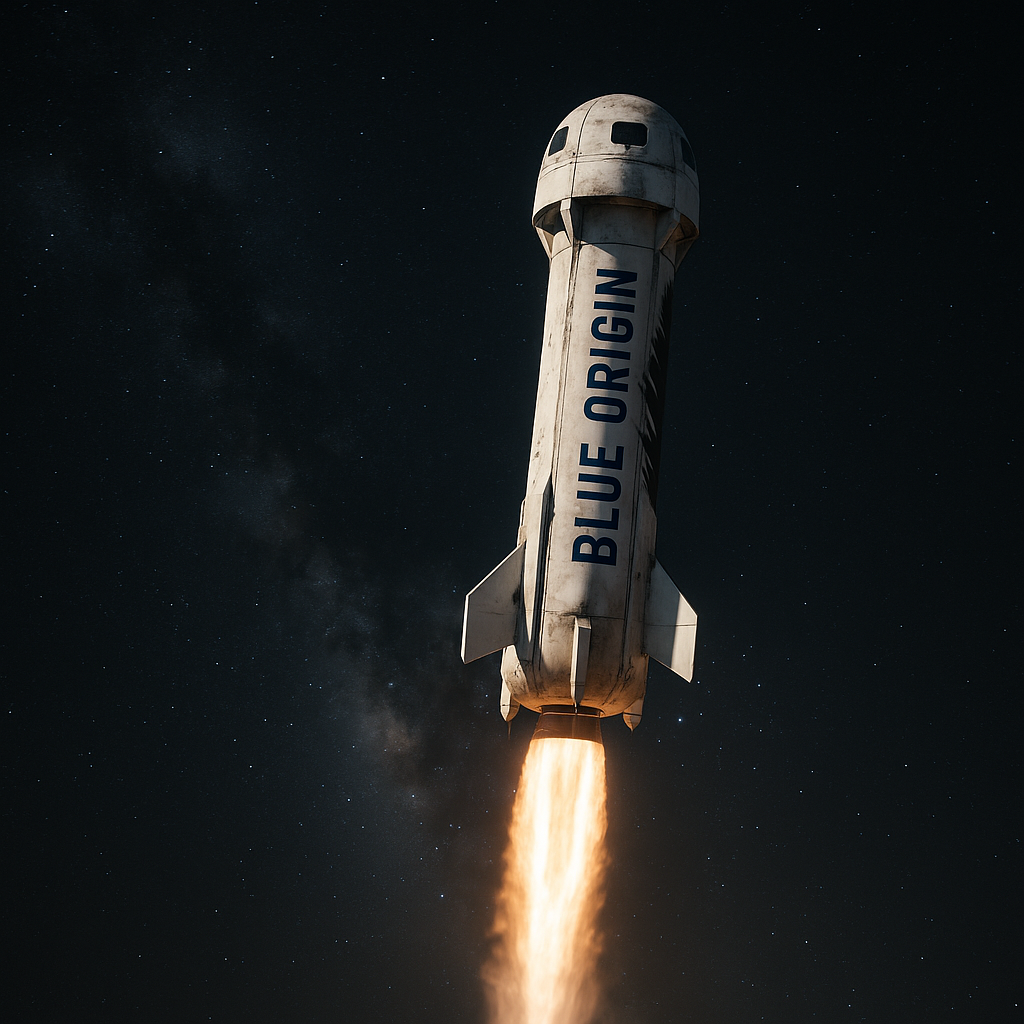
Blue Origin may need to seek external funding to sustain its ambitious launch cadence, marking a potential shift in the company's financial model after years of relying entirely on Jeff Bezos's personal wealth. The revelation signals that even Bezos's substantial resources may not be sufficient to fund the company's current trajectory as it competes for major government contracts and accelerates New Glenn orbital operations.
Blue Origin has operated since 2000 under a straightforward financial model: Bezos sells Amazon stock and writes checks. This approach allowed the company to pursue moonshot programs -- including suborbital tourism, lunar landers, and heavy-lift rockets -- without answering to venture investors or public markets. But as New Glenn development accelerates and launch cadence targets climb, the capital requirements have apparently outpaced what that model can sustain. The shift reflects not financial distress, but rather the scale mismatch between Bezos's willingness to fund operations and the cost of executing multiple concurrent programs at the velocity Blue Origin now pursues.
The timing matters. Blue Origin is in active competition for NASA's Artemis lunar lander contract, currently held by SpaceX, and has committed to regular New Glenn launches starting in 2025. The company has also invested heavily in manufacturing capacity at its West Texas facility and development infrastructure in Florida. These programs overlap in ways that create peak capital demands that may exceed prior spending patterns. Bezos has already committed an estimated $10 billion annually to Blue Origin in previous years -- one of the largest private space investments globally -- but the current expansion apparently requires additional capital sources.
External funding would introduce a material change to Blue Origin's operational autonomy. Investors -- whether venture firms, strategic partners, or other sources -- would expect board representation, return timelines, and decision-making input. This differs fundamentally from Bezos's model, where he has set strategy and timelines without external pressure. Any funding round could also signal Blue Origin's valuation in a way it has avoided by remaining private and Bezos-funded.
The company has not formally announced a fundraising effort or external capital need, but industry observers have noted signals in recent strategic decisions and program pacing. Blue Origin executives have mentioned the importance of multiple funding sources in recent communications, and the company has explored various partnership structures that could provide capital alongside operational benefit.
A formal funding announcement would represent a watershed moment for the private space industry. It would validate the premise that even decade-long, single-billionaire-funded programs eventually face capital constraints at meaningful scale. It would also suggest that Blue Origin's competitive position may depend partly on investor appetite, not purely on engineering execution or Bezos's personal commitment.
The key question is whether external capital becomes an operational advantage or constraint. Early-stage investors in SpaceX saw 100x+ returns; Blue Origin's investors could have similar expectations. Whether Bezos accepts that dilution, and on what terms, will shape the company's decision-making for years to come.
Watch for any formal announcement of venture funding, strategic investment, or debt financing. The structure and source of capital -- whether venture, sovereign wealth, or corporate partners -- will signal Blue Origin's path forward.