Blue Origin Seeks $10 Billion in First Outside Capital Raise at $130 Billion Valuation
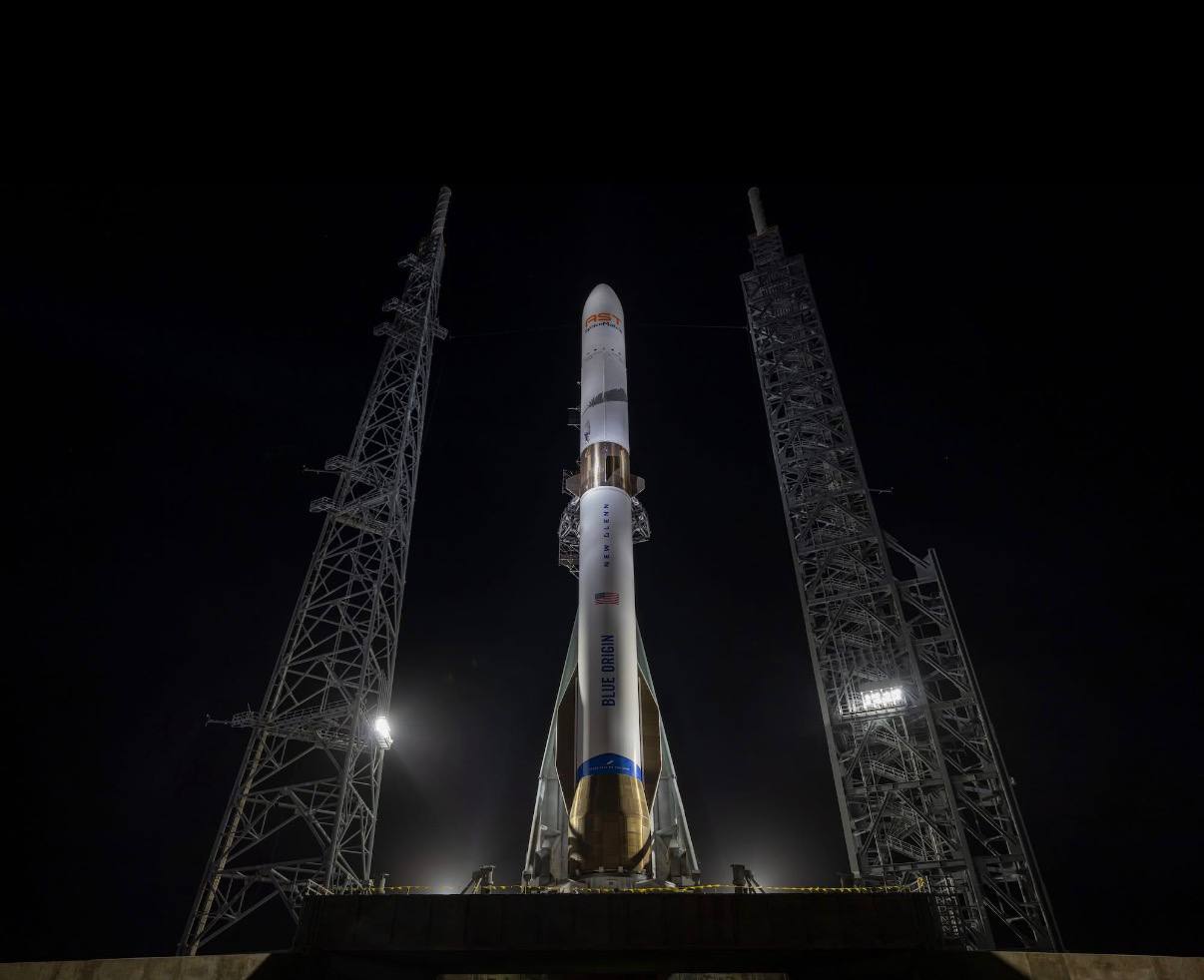
Blue Origin, the rocket company founded by Jeff Bezos, is raising $10 billion in private capital, a first in the company's history that would value it at $130 billion. The move marks a structural shift for a company that has subsisted almost entirely on Bezos's personal funding since its founding in 2000.
Coatue Management, a large asset manager, is expected to lead the round with a $4 billion commitment. Another $4 billion is expected from large institutional investors, and Bezos will contribute an additional $2 billion himself. The company is seeking to become a global leader in spaceflight, developing super heavy lift rockets, lunar landers, and two planned megaconstellations, competing with SpaceX in launch, telecommunications, and space-based data centers.
Unlike SpaceX, which began with a relatively small investment from Elon Musk and grew through government and commercial contracts, private investment, and loans, Blue Origin has relied on Bezos, who now invests several billion dollars a year into operations spread across Washington, Alabama, and Florida. Sources indicate Bezos, 62, has grown fatigued from self-funding the company. In 2017 he hired Bob Smith to grow Blue Origin toward self-sufficiency on government and commercial contracts, with individual programs told to become cash-flow neutral. That effort largely failed and led to Smith's departure in 2023.
The fundraising figures are dwarfed by the $85 billion SpaceX raised through its initial public offering earlier this year and its valuation of roughly $2 trillion. Blue Origin also needs a capital plan to compete with the stock options SpaceX offers employees. During the spring and summer, multiple sources said Bezos was involved in fundraising activities. Those plans were temporarily set back in late May when the company's flagship New Glenn rocket exploded in Florida and destroyed its only launch pad.
Since then, Bezos and chief executive Dave Limp have moved quickly to clean up the launch site and begin rebuilding. Bezos has said publicly he intends to return New Glenn to flight before the end of this year, though most industry observers believe a 12-month timeline is more likely. The recovery has been uncharacteristically urgent for a company whose mascot is a turtle and whose motto pledges to move step-by-step, ferociously. The urgency is likely tied to Bezos closing financial deals and wanting to demonstrate his commitment to getting New Glenn flying.
New Glenn is the backbone of Blue Origin's ambitions. On the lunar side, the company aims to deliver large cargo and humans to the surface for NASA and commercial companies. It is also counted on by commercial satellite launch customers to provide pricing competition. Blue Origin has recently announced two megaconstellation projects of its own: the TeraWave internet constellation in low-Earth and medium-Earth orbit for enterprise connectivity, and Project Sunrise, a constellation of up to 51,600 satellites in Sun-synchronous orbits at altitudes ranging from 500 to 1,800 kilometers.
These projects will require tens to hundreds of billions of dollars to reach fruition. Bezos will seek private capital both to limit his own investments and to provide the funding needed for Blue Origin to compete with SpaceX. For the first time, the company will answer to investors other than its founder.
Watch whether the terms of the raise carry performance milestones, and whether Blue Origin returns New Glenn to flight by the end of this year as Bezos has stated, or on the longer timeline observers expect.