Blue Origin's New Glenn Explodes During Static Fire Test at Cape Canaveral
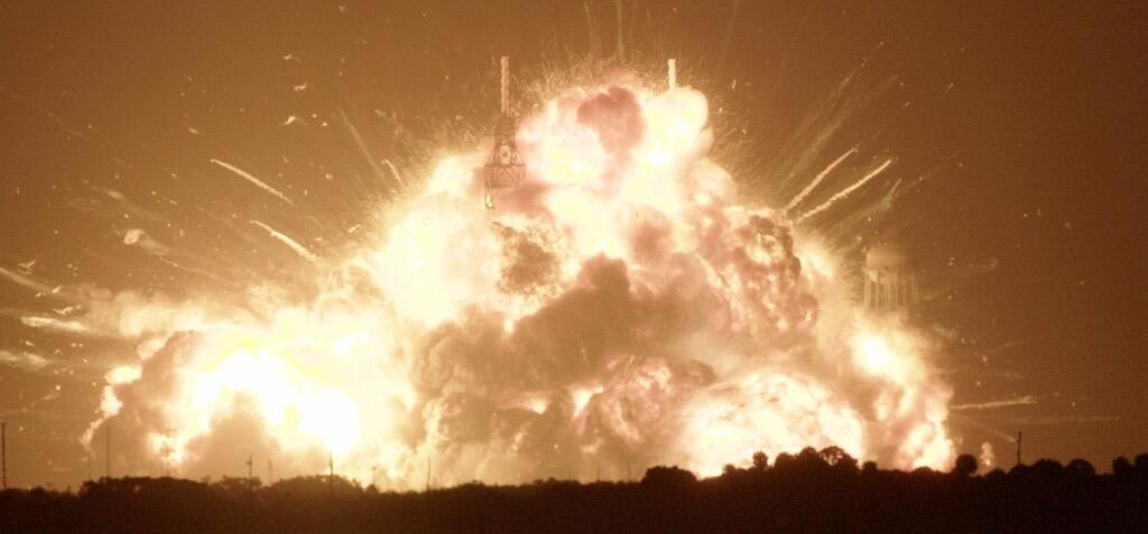
Blue Origin's New Glenn rocket exploded during a static fire engine test at Cape Canaveral Space Force Station on May 28, destroying the vehicle and inflicting extensive damage to Launch Complex 36. The explosion, visible from 115 miles away in Fort Pierce, Florida, marks a catastrophic setback for the company's effort to establish itself as a heavy-lift launch provider and threatens multiple high-stakes programs already in motion.
The incident occurred at 9 p.m. EDT as Blue Origin conducted a pre-launch test of the rocket's booster engines before a scheduled deployment of Amazon Leo satellites planned for June 4. The static fire test, a standard procedure to verify engine performance before flight, turned catastrophic when the booster's engines ignited. The blast toppled a lightning protection tower and damaged ground infrastructure across the pad. All personnel had been evacuated from the immediate work area and accounted for following the explosion. The fourth New Glenn vehicle built by Blue Origin is now a total loss.
The timing compounds Blue Origin's challenges. NASA had announced just days earlier that it selected Blue Origin to build a lunar lander variant of New Glenn for the Artemis program, a cornerstone of the agency's effort to establish sustained human presence on the moon. That contract award framed New Glenn as central to American lunar exploration through the 2030s. The pad damage now threatens to ground the rocket for months, delaying not only Amazon's constellation ambitions but also the developmental schedule for the NASA lunar lander variant.
New Glenn has faced years of development delays and cost overruns since Blue Origin announced the program in 2016. This is the fourth test article lost, a particularly expensive failure given the rocket's scale and complexity. The Super Heavy-class booster stands 235 feet tall and represents Blue Origin's most ambitious launch vehicle to date. The explosion marks the largest American rocket failure in nearly seven decades.
The incident arrives at a uniquely vulnerable moment for American heavy-lift capability. SpaceX's Starship, the only other next-generation super-heavy rocket in development for U.S. operations, remains grounded following its own recent test flight anomaly pending investigation. With both of America's next-generation heavy-lift rockets now sidelined simultaneously, the timeline pressure on Artemis intensifies. NASA had targeted lunar missions in the late 2020s, a schedule already subject to review. Blue Origin will face significant scrutiny on root cause analysis and corrective action before the Federal Aviation Administration clears New Glenn to return to flight.
The explosion also complicates Amazon's competitive position. The Leo satellite constellation requires thousands of launches to establish full global coverage, and each delay extends SpaceX's Starlink dominance in broadband coverage. Amazon had positioned New Glenn as critical to accessing affordable launch capacity for its mega-constellation deployment.
The focus now turns to the investigation findings and Blue Origin's corrective action plan. Any structural or systemic issues with the booster design could extend grounding periods significantly beyond initial estimates.