China Reaches Year-Long Spaceflight Milestone With Shenzhou-23 Launch
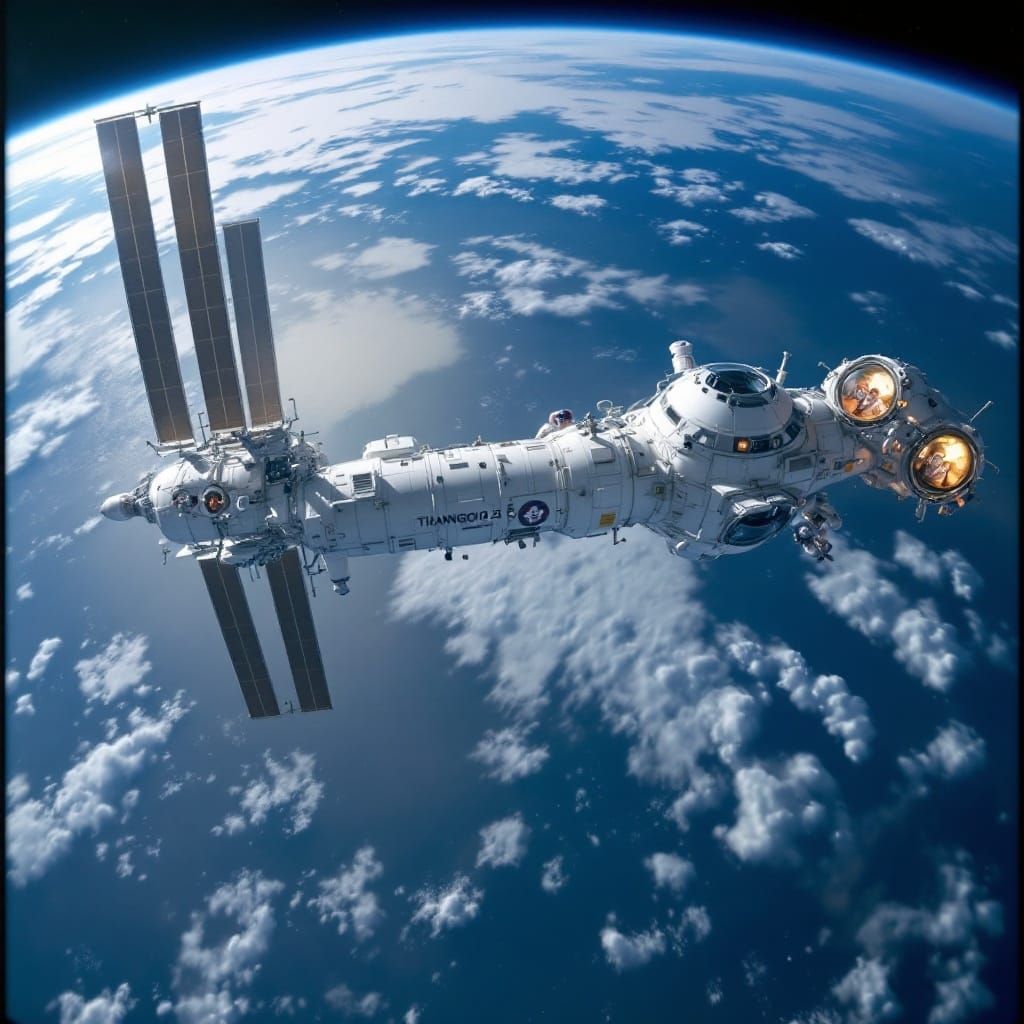
China launched its Shenzhou-23 mission on May 25, 2026, carrying three astronauts to the Tiangong space station, including Hong Kong's first astronaut and a crew member scheduled to remain in orbit for a full year. The mission represents a significant step in China's human spaceflight program and validates capabilities essential for its declared goal of landing humans on the Moon by 2030.
The Shenzhou-23 mission launched from Jiuquan Satellite Launch Center in northwestern China and achieved successful docking with the orbiting Tiangong complex. Commander Zhu Yangzhu leads the crew. Lai Ka-ying's presence aboard marks a symbolic integration of Hong Kong into China's space infrastructure, while Zhang Zhiyuan's assignment to a twelve-month mission duration breaks the country's previous record for continuous human spaceflight.
Extended-duration missions serve a specific purpose in human spaceflight development. They provide critical data on how the human body adapts to prolonged weightlessness and isolation, identify engineering weaknesses in life support systems under extended operational stress, and establish operational protocols for rotations and crew transitions. Both NASA and Russia have operated crews on the International Space Station for comparable periods, but China's achievement of this duration on its own station represents progress toward operational autonomy in deep-space exploration. The 2030 lunar landing timeline requires confidence in systems and personnel performance across missions lasting weeks or months beyond low Earth orbit.
Zhang Zhiyuan's year-long assignment differs from typical three-month Tiangong missions that China has conducted since 2021. The extended duration allows evaluation of hardware reliability, consumables management, and physiological responses specific to China's space station architecture. Lai Ka-ying's participation carries political significance beyond technical achievement. Her selection underscores Beijing's integration of Hong Kong into national strategic programs and appeals to broader narratives about Chinese technological advancement and unified national identity.
China's crewed spaceflight cadence has accelerated substantially over the past five years. The Tiangong station now operates with near-continuous crew presence, rotating through multiple missions annually. This operational tempo mirrors approaches adopted by the Soviet Union and Russia during their early space station programs and supports the infrastructure development that precedes and accompanies lunar programs. The selection of crew for year-long missions indicates confidence in training, vehicle reliability, and mission planning that extends beyond China's previous operational envelope.
Completion of Zhang Zhiyuan's full twelve-month mission without critical system failures or medical emergencies would substantially strengthen China's case for the technical and operational readiness required for its lunar agenda. The data accumulated from this mission will inform equipment specifications, crew training protocols, and risk management strategies for subsequent deep-space ventures. Both the technical validation and the symbolic value of achieving this milestone simultaneously reinforce China's position as a spacefaring power capable of operating at scales and durations historically restricted to the United States and Russia.
The next major indicator will come during the second half of 2026, when Zhang Zhiyuan's mission approaches the midway point and data on system performance and crew health becomes public through Chinese space agency announcements.