Chinese Commercial Rocket Stage Breaks Apart in Orbit, Scattering Debris Near Starlink Shell
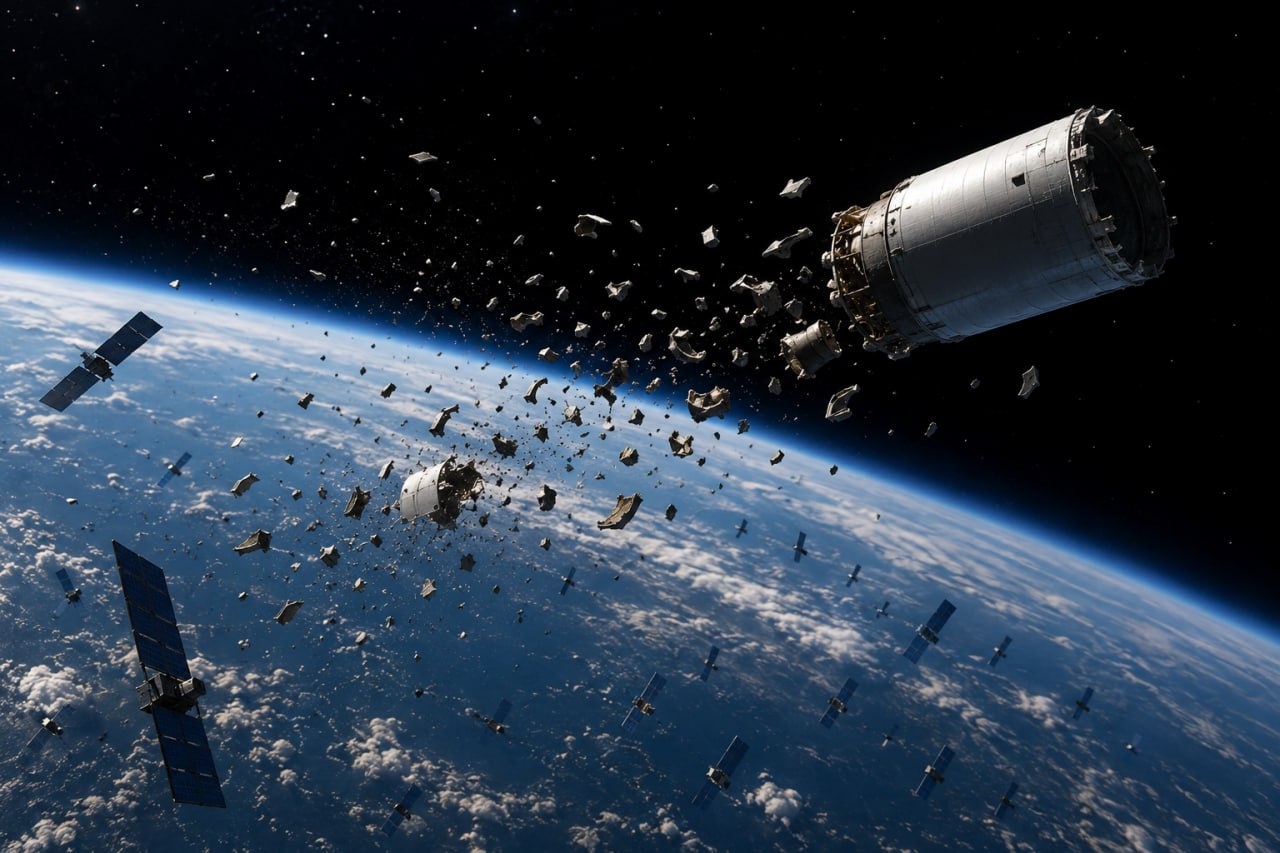
The upper stage of a Zhuque-2E rocket has fragmented in low-Earth orbit, generating an estimated 100 to 150 pieces of debris in a region home to the International Space Station and a significant portion of SpaceX's Starlink network. The breakup occurred shortly after the rocket reached orbit on June 9, raising fresh concerns about collision risk for satellites operating at that altitude.
The fragmentation happened perhaps around the time the upper stage was expected to perform a disposal burn, following a launch that carried two satellites providing direct-to-cell communications. The US Space Force confirmed the event on space-track.org, the website the military uses to distribute orbit data to the public. The breakup is the latest in what experts describe as China's growing contribution to the space junk problem.
The Zhuque-2E, built by the Chinese company LandSpace, has a second stage measuring between 25 and 30 feet long and 11 feet in diameter. The main body of the upper stage is now orbiting between 208 and 263 miles in altitude at an inclination of 54.5 degrees to the equator. The Space Force has not yet added any of the debris fragments to its official catalog of human-made space objects. Darren McKnight, a senior technical fellow at the orbital intelligence company LeoLabs, said the event likely generated 100 to 150 pieces.
The uppermost part of the debris orbit crosses the ISS orbit, but aerodynamic drag will quickly pull the fragments below the station. The Space Force advised that the tracked pieces are being incorporated into routine conjunction assessment to support spaceflight safety, adding that there are currently no threats to human spaceflight and that analysis is ongoing. The debris could pose a greater threat to Starlink satellites, particularly those providing direct-to-device connectivity and newly launched satellites flying at lower altitudes than the bulk of the constellation.
The altitude is low enough for aerodynamic drag to cause most of the debris to reenter the atmosphere within months, with most material burning up. A debris event above 400 miles would take decades or longer to clear naturally. According to an analysis by Space Domain Awareness expert Jim Shell, the mass of Chinese rocket bodies in long-lived orbits has grown by more than 150 percent in the past five years, even as Russian and American figures decline or hold steady. The increase comes as China launches its own megaconstellations designed to compete with Starlink.
McKnight characterized the breakup as a slight space safety issue, but said the broader trend is not good. He noted that three of the top four breakup events in low-Earth orbit are of Chinese origin, with two stemming from Chinese rocket body explosions in the last four years. China's Long March 6A rocket has an especially poor record, including two explosions that littered a higher orbit with more than 1,000 fragments that will remain for decades or centuries.
Rocket bodies are the most concerning sources of debris because they are large and massive, often carrying residual propellant and high-pressure gases that can trigger explosions. There is no way to maneuver or dispose of them once abandoned.
The Space Force said analysis of the fragmentation is ongoing, and the tracked pieces are being folded into routine conjunction assessments to support spaceflight safety.