DARPA to Demonstrate First U.S. On-Orbit Satellite Servicing This Summer
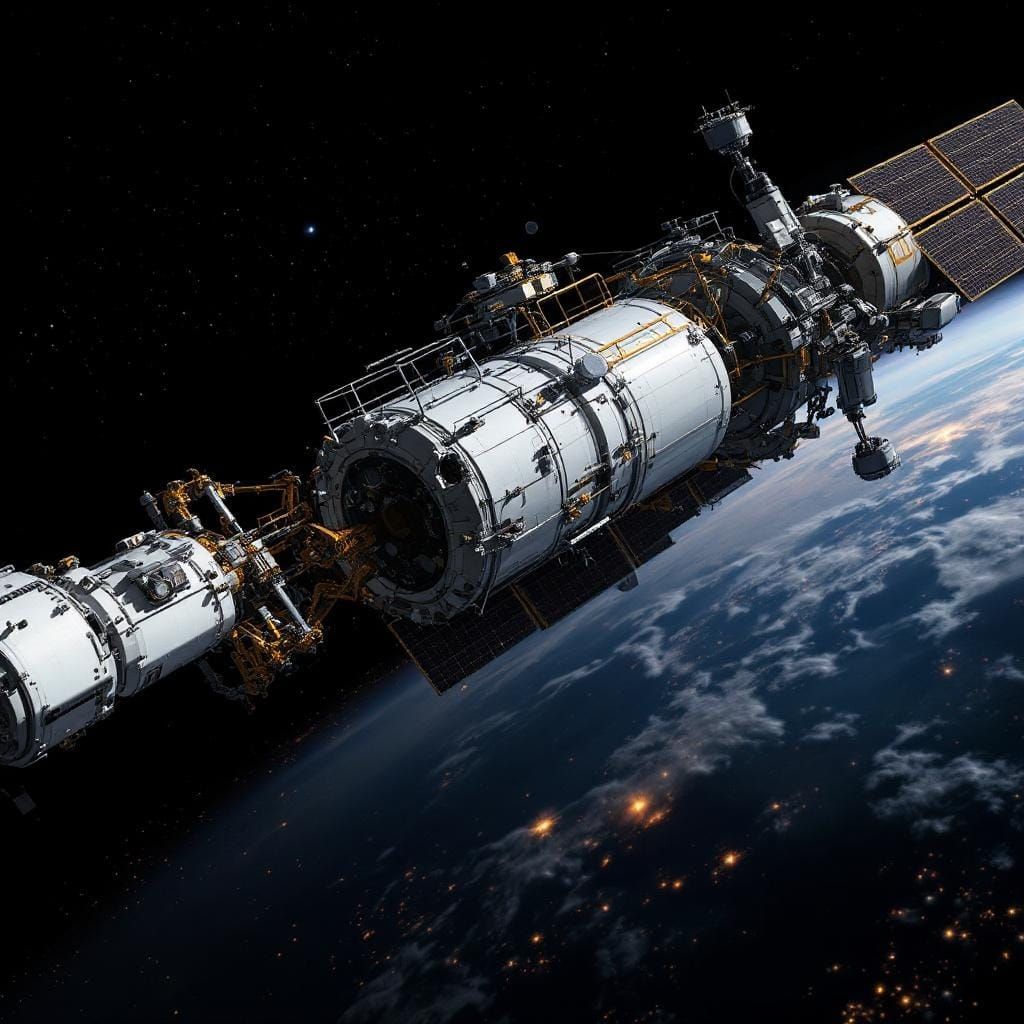
The Defense Advanced Research Projects Agency and Northrop Grumman will launch the Robotic Servicing of Geosynchronous Satellites mission this June, marking the first U.S. government attempt to extend a satellite's life in orbit by robotic refueling and repositioning. The LINK spacecraft will rendezvous with NASA's Neil Gehrels Swift Observatory at geosynchronous altitude and boost its orbit, keeping the decades-old gamma-ray telescope operational beyond its fuel reserves.
Satellite servicing remains a nascent capability in the commercial sector, with only a handful of companies operating in this space and no government-led demonstration to date. Most satellites in geosynchronous orbit are simply abandoned when they deplete their fuel reserves, even though the spacecraft itself remains functional. A successful RSGS mission would validate the technical feasibility of orbital maintenance, repair, and repositioning operations at the 22,000-mile-altitude band where most telecommunications, weather, and early-warning satellites operate.
DARPA selected Northrop Grumman as prime contractor for RSGS in 2018. The LINK spacecraft is purpose-built for proximity operations and mechanical manipulation in GEO, incorporating autonomous rendezvous capabilities and a servicing arm designed to interface with satellite fuel ports and other mechanical systems. Launch is scheduled for June 2026 aboard a Northrop Grumman Pegasus XL air-launched rocket from NASA's Wallops Flight Facility in Virginia. The Swift Observatory was selected as the servicing target because of its scientific value, operational status, and design that permits external refueling.
Swift has operated since 2004 and has become essential for gamma-ray burst research and rapid multispectral observations of transient astronomical events. The satellite carries only enough fuel for another two to three years of station-keeping in its current orbit. Without intervention, Swift would eventually drift toward the graveyard orbit as operators perform final deorbit maneuvers, ending one of NASA's most productive observatories. A successful fuel transfer would extend the mission by five to ten years.
Beyond Swift, RSGS success reframes the economics of geosynchronous infrastructure. Satellites representing hundreds of millions of dollars in development and launch costs become repairable assets rather than single-use commodities. The implications extend to military and intelligence networks that depend on GEO platforms. A demonstrated capability to refuel and reposition allied satellites translates directly into a capability to approach, inspect, and potentially interfere with adversary satellites. The dual-use calculus makes RSGS strategically significant even in a peacetime demonstration.
DARPA and Northrop Grumman plan a media event at Wallops on June 17 ahead of the scheduled launch window. The mission will carry a satellite-mounted sensor package to validate autonomous proximity operations, mechanical capture procedures, and fluid transfer systems in the GEO environment. If LINK successfully docks with Swift and transfers fuel, the U.S. space infrastructure just fundamentally changed. Failure leaves the proven graveyard orbit strategy as the default endpoint for multibillion-dollar assets.