Dark Energy May Be Evolving, Upending Cosmology's Biggest Mystery
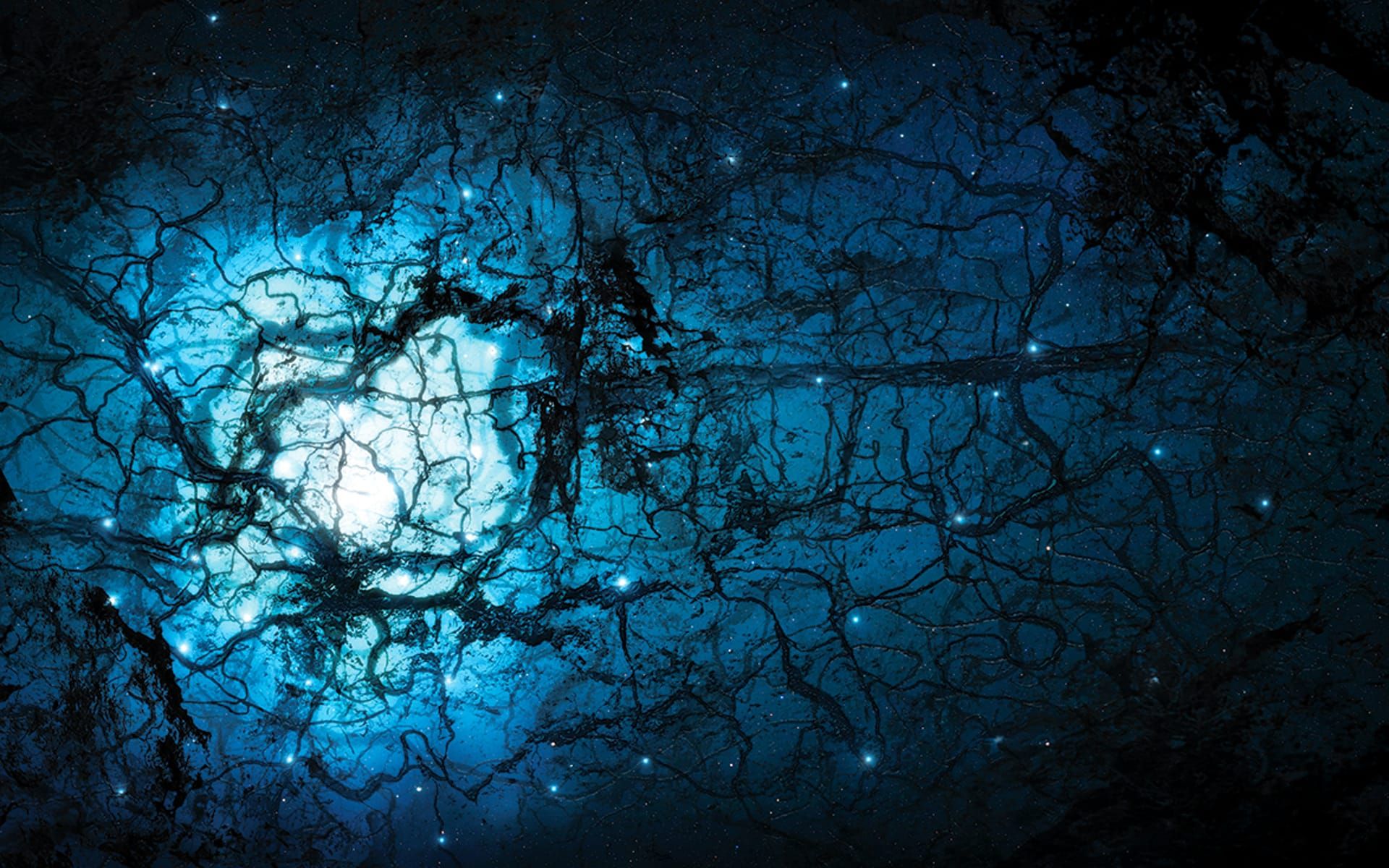
After five years of observation, the Dark Energy Spectroscopic Instrument has completed the largest three-dimensional map of the universe ever constructed -- and the early findings suggest the force driving cosmic expansion may not be constant, challenging a cornerstone assumption of modern physics. The discovery could reshape how scientists understand the universe's ultimate fate.
DESI, mounted on the Mayall Telescope at Kitt Peak in Arizona, spent its survey period measuring the positions and distances of tens of millions of galaxies, quasars, and stars stretching billions of light-years into space. The instrument works by capturing the light from these distant objects and analyzing their spectral signatures -- a technique that allows astronomers to determine both position and recession velocity with unprecedented precision. This combination yields the most detailed three-dimensional cosmic structure ever mapped, providing a clearer picture of how matter and energy are distributed throughout the observable universe.
The standard model of cosmology, anchored by Einstein's cosmological constant, treats dark energy as unchanging -- a uniform property of space itself that drives the universe's accelerating expansion at a constant rate. This model has dominated theoretical physics for nearly three decades. But preliminary analysis of DESI's dataset hints at something unexpected: dark energy's strength may actually evolve across cosmic time. If confirmed by deeper analysis, this finding would indicate that the universe's expansion history was different in the distant past than today, and its future trajectory may deviate significantly from current predictions.
The implications extend far beyond cosmology departments. If dark energy is not constant, the universe's ultimate fate becomes genuinely uncertain. Under the standard model, accelerating expansion continues indefinitely in what cosmologists call the "heat death" scenario. But if dark energy weakens over time, expansion could slow, eventually reversing into a contraction. Conversely, if dark energy strengthens, expansion could accelerate beyond current models' predictions. DESI's data provides the most precise measurements ever available to test which scenario aligns with reality.
The survey mapped over 35 million objects, recording their three-dimensional positions with a level of accuracy that allows researchers to trace the large-scale structure of the universe -- the cosmic web of galaxy clusters and filaments separated by vast voids. This mapping provides independent constraints on dark energy that complement observations from supernovae and the cosmic microwave background, the previous gold standard for dark energy measurements. The combination of independent datasets strengthens the case that something fundamental about dark energy may need revision.
DESI's completion marks not an endpoint but a transition. The raw data now enters the phase of rigorous peer review and deeper statistical analysis. Cosmologists will spend years extracting every constraint hidden in the survey's measurements, cross-checking findings against other datasets and exploring alternative theoretical explanations. The collaboration's stated goal is to measure dark energy's properties to unprecedented precision -- work that will occupy the field well into the next decade.