Iceye Shifts From Radar Specialist to Multi-Sensor Intelligence Provider With $33M Finnish Grant
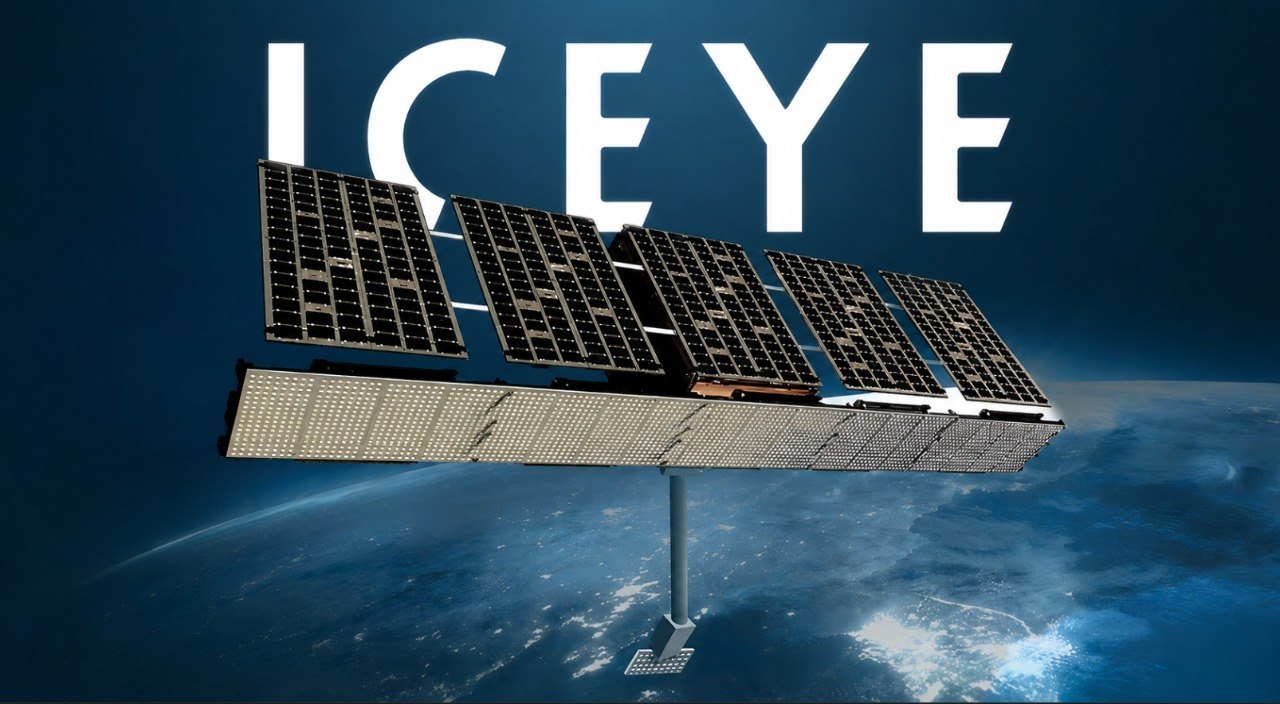
Finland has awarded Finnish satellite operator Iceye a $33 million grant to scale production of its synthetic aperture radar constellation and develop two entirely new sensor types: optical imaging and radio frequency signal intelligence. The grant, approved by Business Finland on June 1, marks a deliberate pivot from single-sensor company to integrated intelligence platform serving government and military customers.
Iceye already operates the world's largest commercial SAR satellite constellation, with roughly 30 satellites in orbit capable of imaging Earth's surface through cloud cover and darkness. SAR has proven invaluable for maritime monitoring, disaster response, and infrastructure assessment, but it cannot capture visible-spectrum detail or intercept radio signals. Adding optical cameras and RF monitoring capability transforms the company's value proposition from a specialized tool into a comprehensive Earth intelligence system.
The $33 million commitment represents a significant shift in how European governments view commercial space operators. This is a direct government grant, not venture capital or a commercial contract. Business Finland, a state-run development agency, treats the investment as critical infrastructure development rather than startup funding. The decision signals that Finland and the broader Nordic region view sovereign access to space-based intelligence as a strategic priority, especially in the context of evolving security challenges in Northern Europe.
Iceye was founded in 2014 and has raised roughly $240 million from private investors to date. The company operates satellites under multiple contracts with European and international defense and civilian agencies. Its existing SAR constellation provides all-weather imaging at a cost and cadence that government agencies have historically accessed only through military intelligence satellites. The addition of optical and RF capabilities would eliminate the need for customers to integrate data from multiple separate constellations, a significant operational efficiency gain.
The optical component addresses a straightforward gap: while SAR penetrates clouds and provides precise geometric data, optical imagery provides the color and fine detail necessary for certain identification and damage assessment. The RF monitoring capability adds signals intelligence to the platform, enabling detection and geolocation of radio transmissions, radar emissions, and communications signals. Together, the three sensor types create redundancy and comprehensive coverage that would typically require coordination among multiple separate systems.
Iceye has indicated it will use the grant to establish new production facilities in Finland and accelerate the deployment timeline for both the SAR expansion and the new sensor developments. The company plans to more than double its constellation size over the next three years, with optical and RF payloads following on a separate development timeline.
The significance extends beyond Iceye itself. European governments have historically relied on U.S. or French intelligence satellites for comprehensive Earth observation. A Finnish company capable of providing integrated SAR, optical, and signals intelligence at commercial scale creates a genuine European alternative and reduces strategic dependence on allies for time-sensitive intelligence.
Watch for Iceye's first optical and RF satellite launches, expected sometime in 2027 or 2028. The operational performance of those early payloads will determine whether the multi-sensor model becomes an industry standard or remains a specialized European capability.