Impulse Space Closes $500 Million Round to Ramp Orbital Tugboat Production
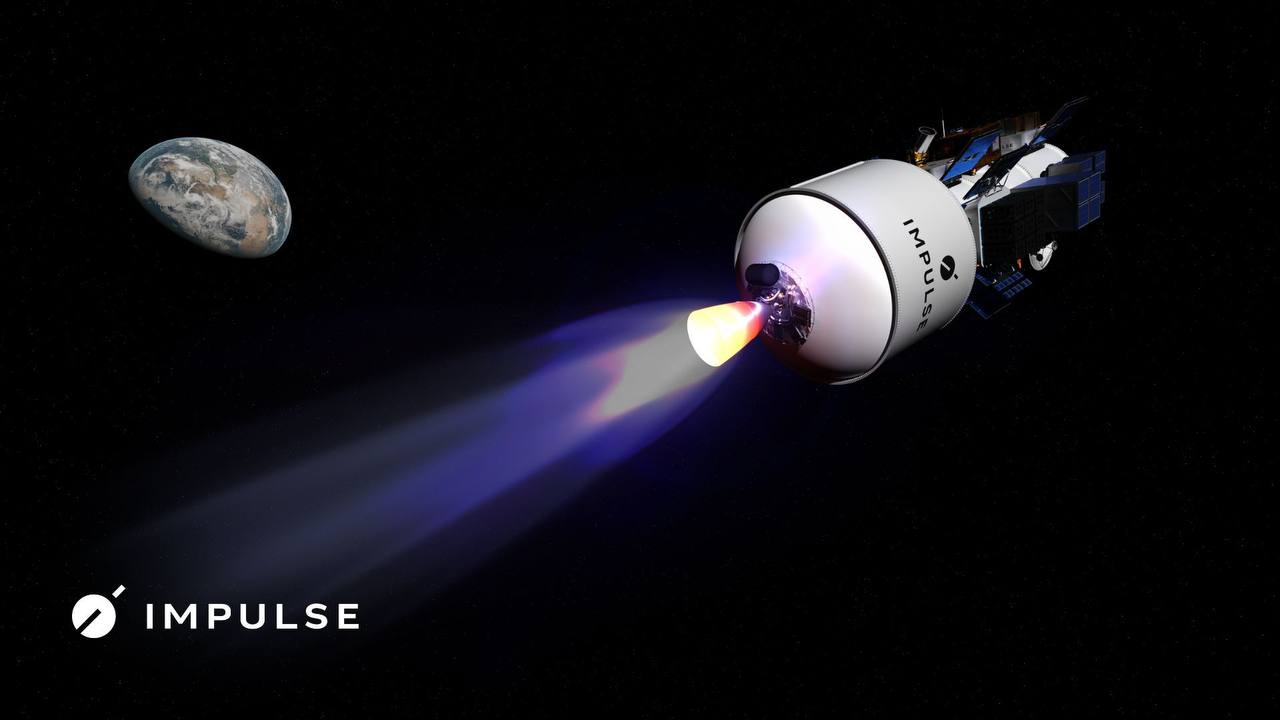
Impulse Space raised $500 million in Series D funding to scale production of its orbital transfer vehicles, with the round co-led by 137 Ventures and BANNER VC. The financing underscores investor confidence that orbital mobility, not launch itself, has become the critical constraint in modern spaceflight.
The company, founded by Tom Mueller who was SpaceX's first employee, manufactures spacecraft that ferry satellites between orbits after deployment. As launch costs have collapsed and operators have shifted toward massive satellite constellations, the ability to move payloads to precise orbital slots has become a bottleneck. Impulse's vehicles solve that problem by catching satellites in their initial orbit and delivering them to their operational destination, a capability increasingly essential for both government and commercial operators.
Impulse closed the Series D round on June 2nd, 2026, without disclosing a new valuation (reportedly over $4.2 billion). President Eric Romo stated the capital would not fund new product lines or facility expansion, but rather accelerate production of existing platforms to meet demand. The $500 million places this among the largest venture raises in the space sector during 2026, signaling that the market for orbital mobility has matured enough to attract substantial institutional capital.
The company has so far focused on hiring specialized engineers rather than betting heavily on automation or artificial intelligence to solve manufacturing challenges. That choice carries implicit message: the constraint in orbital transfer vehicles remains hardware engineering and production throughput, not algorithmic optimization. Romo told investors the company needed to continue its current trajectory and build more of the same product, faster.
This funding round reflects a fundamental shift in how the space industry perceives its challenges. For decades, the emphasis fell on launch capacity and access to orbit. SpaceX's Falcon 9 and broader competition have inverted that equation. With launch prices dropping and constellation operators able to place hundreds of satellites annually, the business problem has migrated downstream to orbital logistics. Companies that can efficiently move mass between orbital altitudes and inclinations now occupy the same strategic position that launch providers held a decade ago.
Impulse's vehicles address a range of missions. Government customers require precise placement of national security satellites, often in orbits that favor launch economics but diverge from operational needs. Commercial constellations need redistribution to maintain coverage patterns. The growing prevalence of smallsat clusters amplifies this demand further. Each launch cadence generates additional dependent demand for orbital transfer services.
The capital Impulse has raised positions it to capture meaningful market share if that demand materializes at scale. Mueller's credibility as a founding SpaceX engineer lends technical credibility to the venture, while the Series D size signals that institutional investors see a real business, not a speculative bet on emerging technology.
Watch for production milestones over the next 12 months. Impulse will need to demonstrate that it can manufacture orbital transfer vehicles at high volume while maintaining quality and reliability. Launch schedules for government programs and major constellation operators will also indicate whether demand projections justify the capital deployment.