Universe's Accelerating Expansion May Not Need Dark Energy, Mathematicians Argue
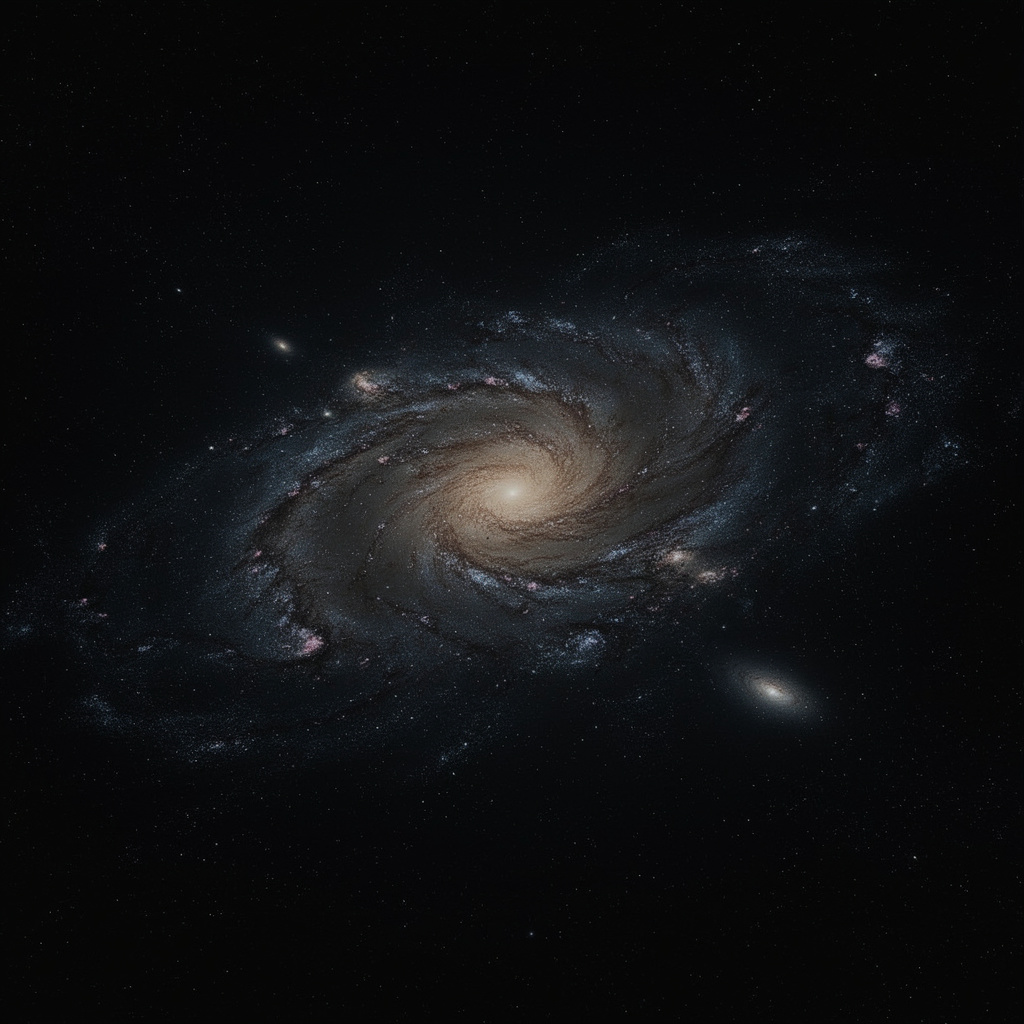
A team of mathematicians has published research challenging one of cosmology's central pillars: the existence of dark energy. The scientists argue that mathematical errors in how the cosmic microwave background is interpreted could fully account for observed cosmic expansion without invoking the mysterious force that has dominated astrophysics for three decades.
The claim, if validated, would represent a fundamental reset for modern cosmology. Dark energy was introduced in the 1990s specifically because observations showed the universe's expansion was accelerating rather than slowing under gravity's pull. Since then, it has become the dominant component of the universe in standard models, accounting for roughly 68 percent of all matter and energy. Yet dark energy remains theoretically mysterious and undetected through any direct means.
Dark energy emerged as a solution to a specific observational problem. In 1998, two independent teams studying distant supernovae found that the universe was expanding faster than deceleration models predicted. Rather than challenge the underlying cosmological framework, the field introduced dark energy as an additional component with repulsive gravitational effects. The cosmic microwave background, radiation left over from the early universe, has since been treated as independent confirmation of this picture through temperature fluctuation analysis.
The mathematicians contend that standard cosmological interpretation of the cosmic microwave background contains systematic errors in how data is analyzed and how statistical significance is established. They argue that once these mathematical issues are corrected, the acceleration of cosmic expansion becomes consistent with standard gravitational physics operating on known matter and radiation alone. No dark energy required.
The implications are staggering if correct. Approximately 2,000 research papers per year rely on dark energy as a foundational assumption. Major telescope programs including the James Webb Space Telescope have allocated significant observation time to dark energy studies. University departments have built research agendas around constraining dark energy properties. A reversal on this scale would force a systematic reevaluation of cosmological models, observational priorities, and decades of published results.
Even cosmologists skeptical of dark energy's physical basis have accepted it as a practical framework for prediction and observation. The mathematicians' argument directly challenges this pragmatic stance by suggesting the framework itself rests on computational errors rather than genuine phenomena.
The potential vulnerability lies in the interpretation of cosmic microwave background data rather than the observations themselves. Different mathematical approaches to analyzing the same raw measurements could in principle yield different conclusions about cosmic geometry and expansion history. The question now centers on whether the mathematical objections raised are valid and whether the broader cosmological community will engage seriously with the critique.
The next critical phase involves peer review and independent verification of the mathematical claims. Cosmologists will scrutinize whether the proposed corrections to cosmic microwave background analysis are justified and whether alternative explanations for accelerating expansion hold up under detailed examination. Until then, dark energy remains cosmology's working model, despite its theoretical uncertainties.