NASA Selects Blue Origin, Firefly, and Two Rover Makers for $1 Billion Lunar Base Push
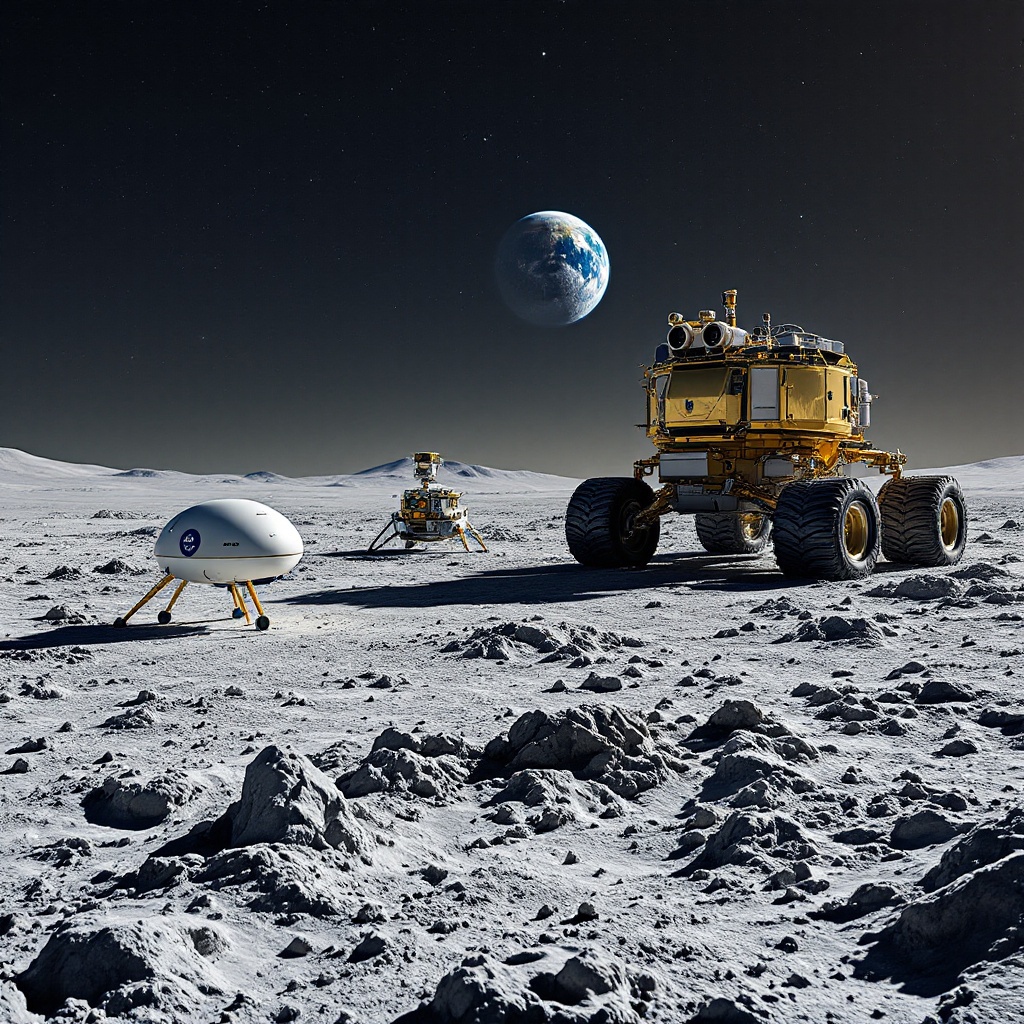
NASA awarded approximately $1 billion in contracts on May 26 to four companies to build and deliver the first infrastructure for a permanent Moon base at the lunar south pole. Blue Origin will develop cargo landers, Firefly Aerospace will deliver four autonomous drones for $75 million, and Astrolab and Lunar Outpost will each build pressurized rovers. Three separate missions are scheduled to launch in 2026, marking the agency's first hardware commitment to sustained lunar habitation since Artemis began.
The lunar base represents a significant shift in how NASA approaches Moon exploration. Rather than brief visits by astronauts, the agency is now contracting for equipment designed to support extended operations and eventual human settlement. The south pole location offers access to water ice deposits that could support a long-term presence. This is not a symbolic mission. NASA Administrator Jared Isaacman described the eventual facility as covering "hundreds of square miles" and using hopping scout drones to mark its perimeter and survey the landing zone.
The contract awards reveal active competition in the emerging lunar economy. Blue Origin's selection over SpaceX for cargo lander operations is notable, particularly given SpaceX's dominance in other NASA contracts. Both companies have been developing lunar landers, but Blue Origin's New Glenn rocket and Blue Moon cargo platform apparently satisfied NASA's requirements for this phase. The competition extends to rovers as well, with Astrolab and Lunar Outpost splitting development contracts rather than a single vendor monopolizing the effort.
Firefly Aerospace's $75 million award for four drones underscores NASA's interest in rapid reconnaissance and perimeter operations. The hopping drones will provide situational awareness before astronauts arrive, mapping hazards and identifying optimal placement for surface infrastructure. Astrolab's pressurized rover will accommodate multiple crew members and carry equipment across rough terrain. Lunar Outpost's rover will support similar operations, creating redundancy and competitive pressure on development timelines.
The 2026 launch timeline is aggressive. Three cargo missions within a single year would concentrate significant investment and risk. If successful, however, the pace would accelerate the timeline for Artemis III, the crewed landing currently targeted for 2028. The back-to-back missions will test launch cadence, operational procedures, and equipment reliability before human crews arrive at the site.
This contract round positions NASA to conduct more infrastructure construction on the Moon between 2026 and 2028 than the agency has completed in its entire spaceflight history. Previous lunar missions rarely numbered more than a handful in any decade. The compressed schedule reflects not only technological readiness but also political commitment to establishing sustained presence before other nations claim strategic positions at the lunar south pole.
The next milestone arrives with the 2026 launches. Mission success will determine whether NASA expands the base with additional contracts or adjusts the Artemis III timeline. Equipment performance in the lunar environment will also inform the scope of subsequent procurement rounds.