NASA Langley Shares Atmospheric Data With Virginia to Strengthen Energy Planning
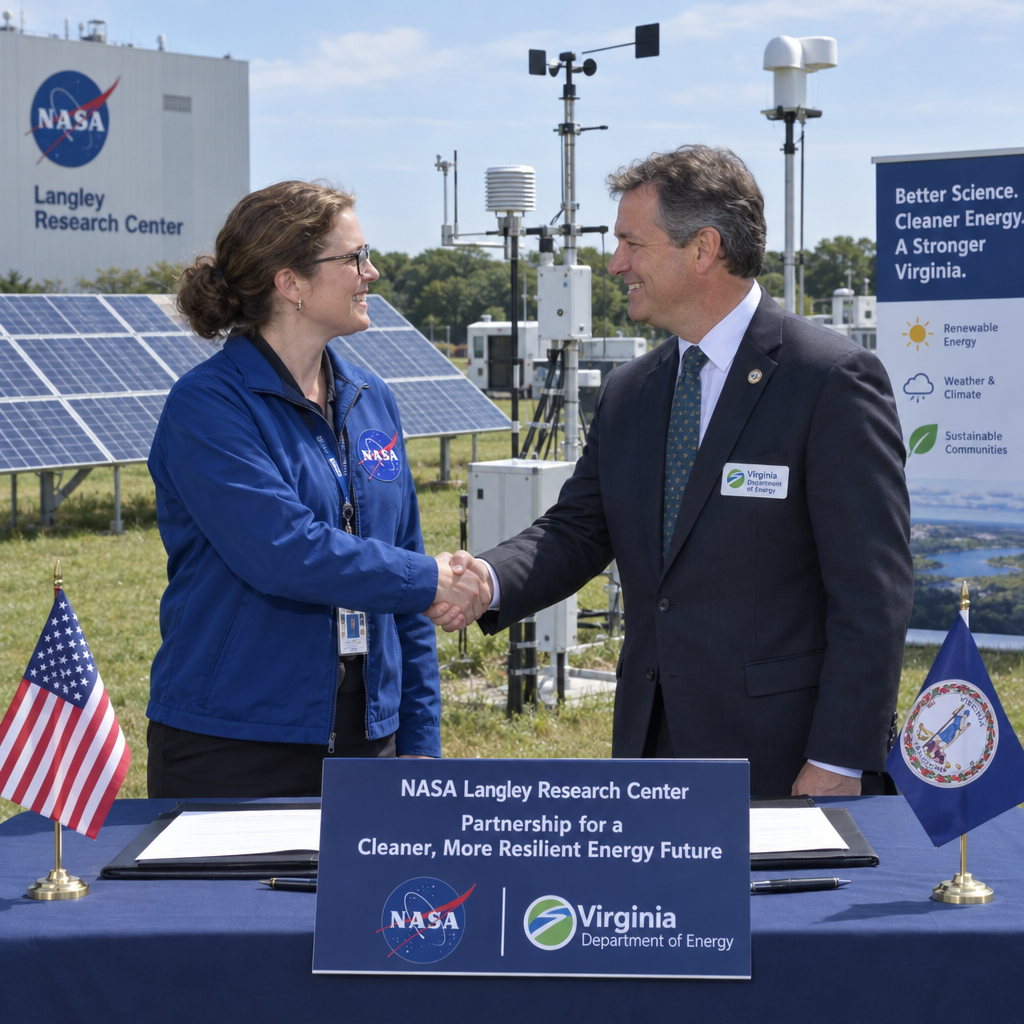
NASA's Langley Research Center has signed a Space Act Agreement with the Virginia Department of Energy to provide solar, meteorological, and future weather risk datasets for the state's energy system modeling and planning. The partnership, announced at a ceremony Friday, aims to support long-term energy security across the Commonwealth.
Under the agreement, NASA Langley will apply its expertise in atmospheric sciences to assist Virginia Energy with resiliency studies, resource analysis, and long-term energy planning. The collaboration is designed to help state officials plan for current and potential extreme weather conditions and assess their implications for electricity demand, energy generation, and system stress.
NASA Langley Deputy Director Allen Kilgore and Virginia Energy Director Vince Maiden signed the agreement during the ceremony at Langley in Hampton, Virginia. The partnership will infuse NASA Prediction of Worldwide Energy Resources, or POWER, data products into Virginia Energy's modeling and analysis system. POWER information supports energy generation system designs and prediction of energy production using validated data products from NASA's Earth Science to Action program, drawing on research across Langley, Goddard Space Flight Center in Greenbelt, Maryland, and Ames Research Center in California.
Through a digital pipeline, Virginia Energy can connect to Langley's POWER web platform to download specific datasets and place them directly into its modeling tools. NASA's POWER team members will work with Virginia Energy researchers to streamline the exchange, adjust formats, and evaluate the need for additional data. POWER data already show where cooling demand is highest across Virginia, using cooling degree days, a measure of how often daily average temperatures exceed 50 degrees Fahrenheit, averaged from 2001 to 2020.
"NASA Langley relishes the opportunity to put our unique science data into the hands of those who want to improve people's lives," Kilgore said. "This collaboration with Virginia Energy will benefit the citizens of Virginia and provide stronger energy security for the Commonwealth."
Maiden said the collaboration would sharpen the state's planning models. "Sound energy planning depends on models that reflect real-world conditions," he said. "This collaboration will help us better understand how weather affects electricity supply and demand, identify vulnerabilities, and weigh resource tradeoffs with greater confidence." The partnership is intended to help Virginians anticipate energy demands, prepare for extreme weather, and understand factors affecting electricity generation, supporting a more reliable and resilient energy system. The information can be directly incorporated into energy policy, planning, and operational decisions.
The partnership was fostered through NASA Langley's Strategic Partnerships Office, which connects industry, academia, and other government agencies with the center's facilities, capabilities, specialized test environments, and technical expertise. NASA POWER team members will continue working with Virginia Energy researchers to streamline data exchange, adjust formats, and determine whether additional datasets are needed.