Russian Satellite Shadows US-Registered Spacecraft Linked to Ukraine, Prompting Washington Warning
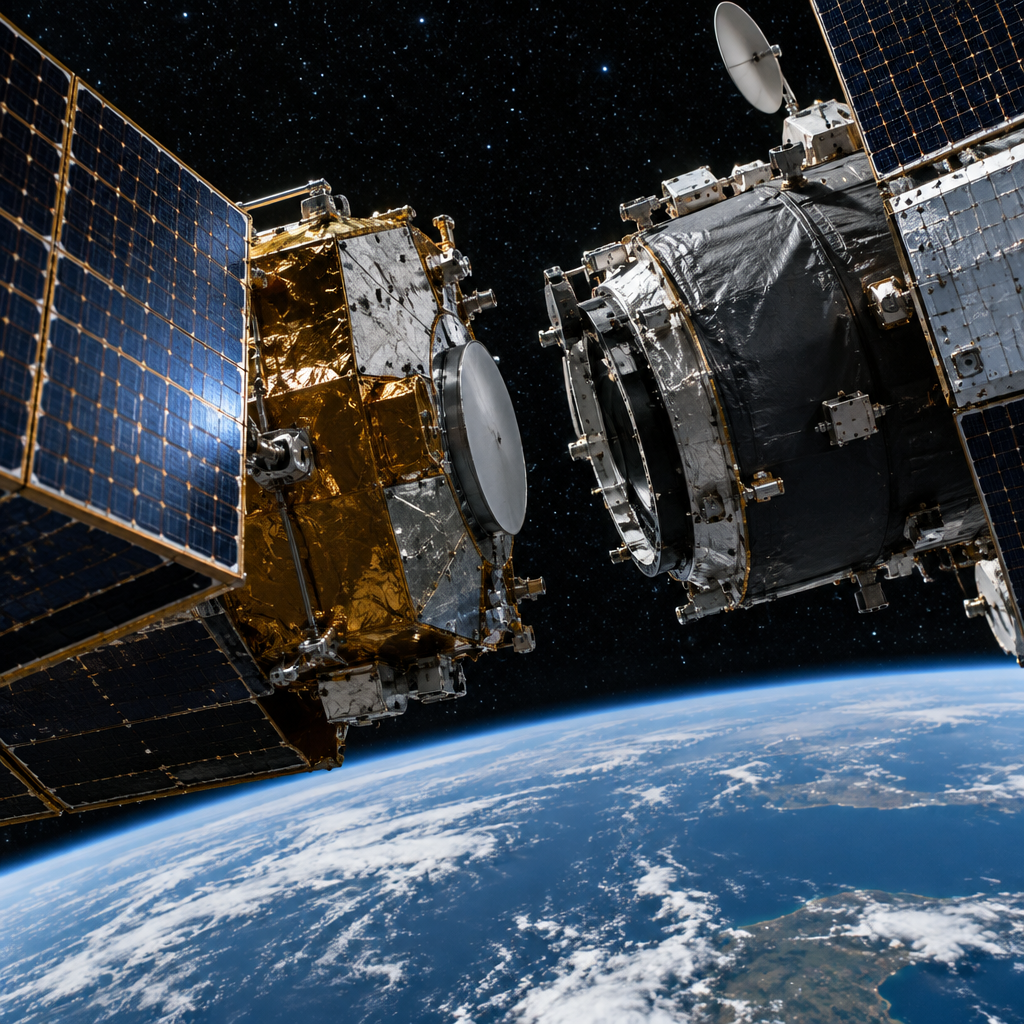
Washington accused Moscow at the United Nations on Wednesday of deliberately maneuvering a Russian military satellite with an undisclosed mission dangerously close to a US-registered satellite believed to supply imagery to Ukraine. US officials condemned the behavior as consistent with on-orbit weapons operations and vowed to defend American interests in space.
The Russian satellite, Cosmos 2612, spent more than two weeks maneuvering toward ICEYE-X36, a radar satellite operated by the American arm of Finnish company ICEYE that supplies imagery to Ukraine's military through some of its spacecraft. It then shadowed the satellite from as close as a third of a mile through the weekend of October 17. Space historian and former NASA astrophysicist Jonathan McDowell said he believed it was the first rendezvous in low Earth orbit between two active satellites without one owner's approval.
The encounter came weeks after Air Force Secretary Troy Meink publicly confirmed that the US has weapons in orbit and the Space Force selected two companies to build space-to-space reconnaissance satellites. It also followed reports that Elon Musk, under White House orders, slowed the military-grade Starlink that Ukraine relies on, rendering some of the country's essential air defense weapons useless.
US Undersecretary of State Thomas G. DiNanno called the Russian satellite's behavior threatening, writing on X that Cosmos 2612 had been intentionally maneuvering dangerously close to a commercial satellite, behaviors consistent with on-orbit weapons operations. He added that the United States will continue to secure and defend American vital national security interests in, from, and to space.
On October 12, commercial trackers feeding the US military's Joint Commercial Operations cell flagged the possible rendezvous when Cosmos 2612 slid into ICEYE-X36's orbit roughly 345 miles above Earth, according to Integrity ISR. On October 15 and 16, the Russian satellite moved from more than 200 miles behind ICEYE-X36 to roughly 3 miles away before holding position through the weekend, tracking firm LeoLabs said. Both satellites travel at roughly 4 miles per second, which Greg Gillinger, senior vice president of strategy and development at Integrity ISR, compared to flying in a very tight formation in an aircraft. Russia didn't accidentally get within a kilometer of X36, he said, calling it an indication of intent.
Clayton Swope, deputy director of the Aerospace Security Project at the Center for Strategic and International Studies, said the operation fits a wider Russian campaign of intimidation that lets President Vladimir Putin poke the West in the eye and watch the West do nothing. LeoLabs said possible aims range from intelligence collection and close inspection to coercion and groundwork for future operations against satellites, though the maneuvers do not establish hostile intent. Swope said there is no internationally recognized rule for determining whether such a maneuver should be considered hostile or what standards should guide a response.
Analysts could not say whether Moscow planned an attack and reversed course or was orbiting nearby for another purpose. The Russian satellite has since pulled back but remained at ICEYE-X36's altitude on Wednesday, holding roughly 250 miles behind it. Russia could approach another ICEYE satellite within weeks, as two more satellites from the same launch will soon line up with the orbit of a second satellite, ICEYE-X37, according to Integrity ISR. The retreat began October 18, two days after President Donald Trump signed an executive order waiving tariffs and most economic restrictions on Russia. Swope said Russia is going to turn it on again.