NASA Accelerates Moon Base Timeline With Industry Partner Announcements
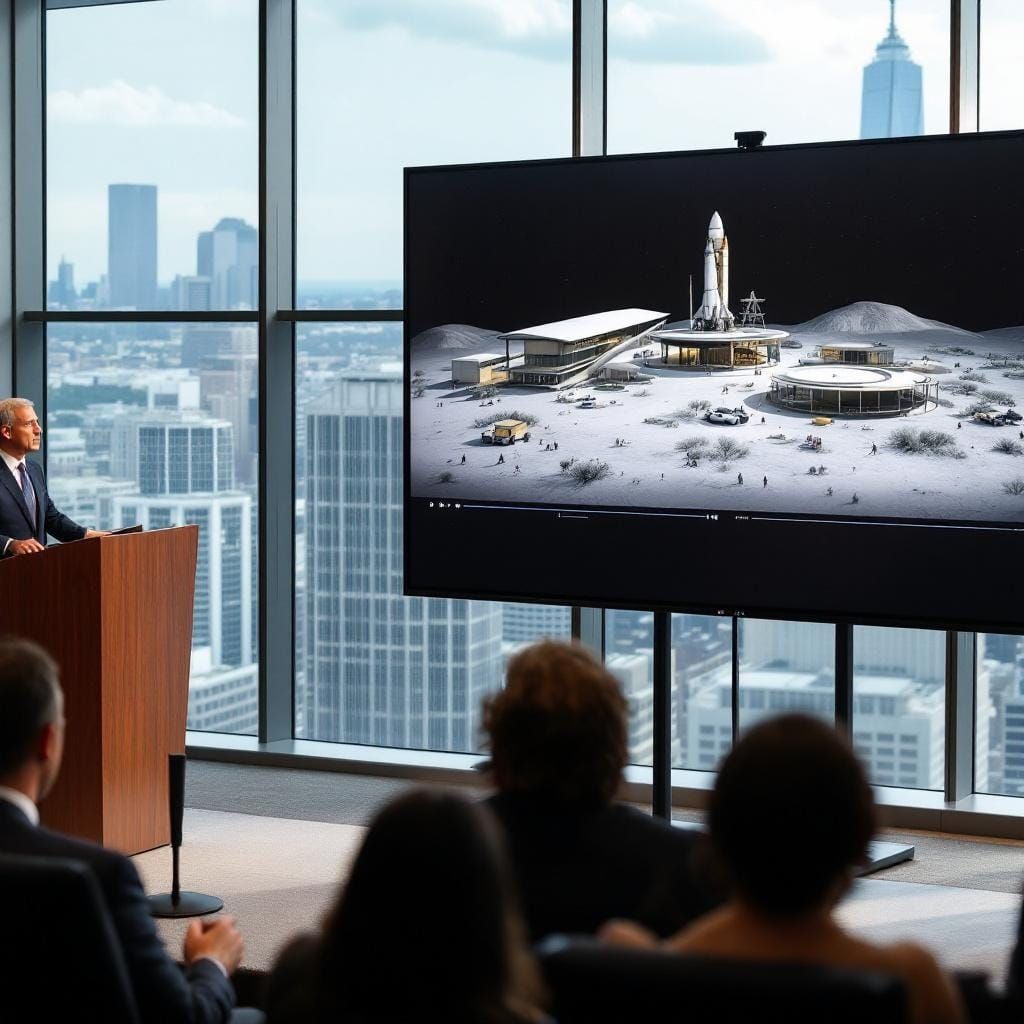
NASA will unveil its strategy for establishing a sustained human presence on the lunar surface during a May 26 news conference at agency headquarters in Washington, marking the formal transition from Artemis exploration missions to permanent lunar infrastructure. The briefing will introduce new industry partners selected to develop critical systems for long-term operations, signaling that the Moon program has moved from concept to active construction phase.
The announcement comes as NASA pivots from its Artemis II crewed lunar flyby, which validated deep space systems and human spaceflight architecture, toward the infrastructure required for continuous surface operations. The space agency has spent the past two years maturing concepts for habitation modules, power generation systems, and resource extraction capabilities that will form the backbone of a lunar base. This news conference will crystallize those plans into concrete partnerships and timelines.
The "new industry partners" language indicates NASA is ready to distribute substantial contracts across the commercial space sector. Companies likely to receive awards are expected to develop habitat modules, surface power systems that can sustain operations through the two-week lunar night, and possibly in-situ resource utilization technology to extract water ice and produce fuel on the Moon itself. These are not small engineering challenges. Surviving the lunar environment requires systems rated for extreme temperature swings, abrasive regolith, and radiation exposure without resupply from Earth. The partners NASA names on May 26 will be betting billions of dollars and years of development on making these systems work.
The accelerated timeline reflects a strategic shift in U.S. space policy. For years, NASA's Moon plans existed in a state of managed uncertainty. Budget pressure, Artemis schedule delays, and changing priorities kept the exact architecture of a lunar base in flux. That ambiguity is ending. By formally announcing industry partners and operational plans, NASA is cementing the Moon base as a permanent fixture of American space activity, similar to how the International Space Station became non-negotiable after the first module launched. Once contracts are awarded and development begins, the program becomes politically durable.
The timing also reflects geopolitical reality. China has accelerated its lunar exploration cadence significantly over the past three years, with the Chang'e-6 sample return mission and advanced plans for a lunar research station. U.S. officials have openly cited Chinese lunar ambitions as a reason to move faster on American infrastructure. A Moon base is no longer just a scientific goal. It has become a strategic assertion of presence and capability in a domain the U.S. intends to dominate.
Watch for the specific list of industry partners announced on May 26. The companies selected will reveal which contractors NASA trusts most with lunar systems. Also monitor the timelines cited for habitat deployment, power system installation, and first sustained crew rotation. Those dates will indicate whether NASA believes it can establish meaningful operations by 2030 or whether realistic deployment extends into the mid-2030s.