NASA's Mars Helicopter Rotor Shatters Sound Barrier in Critical Test
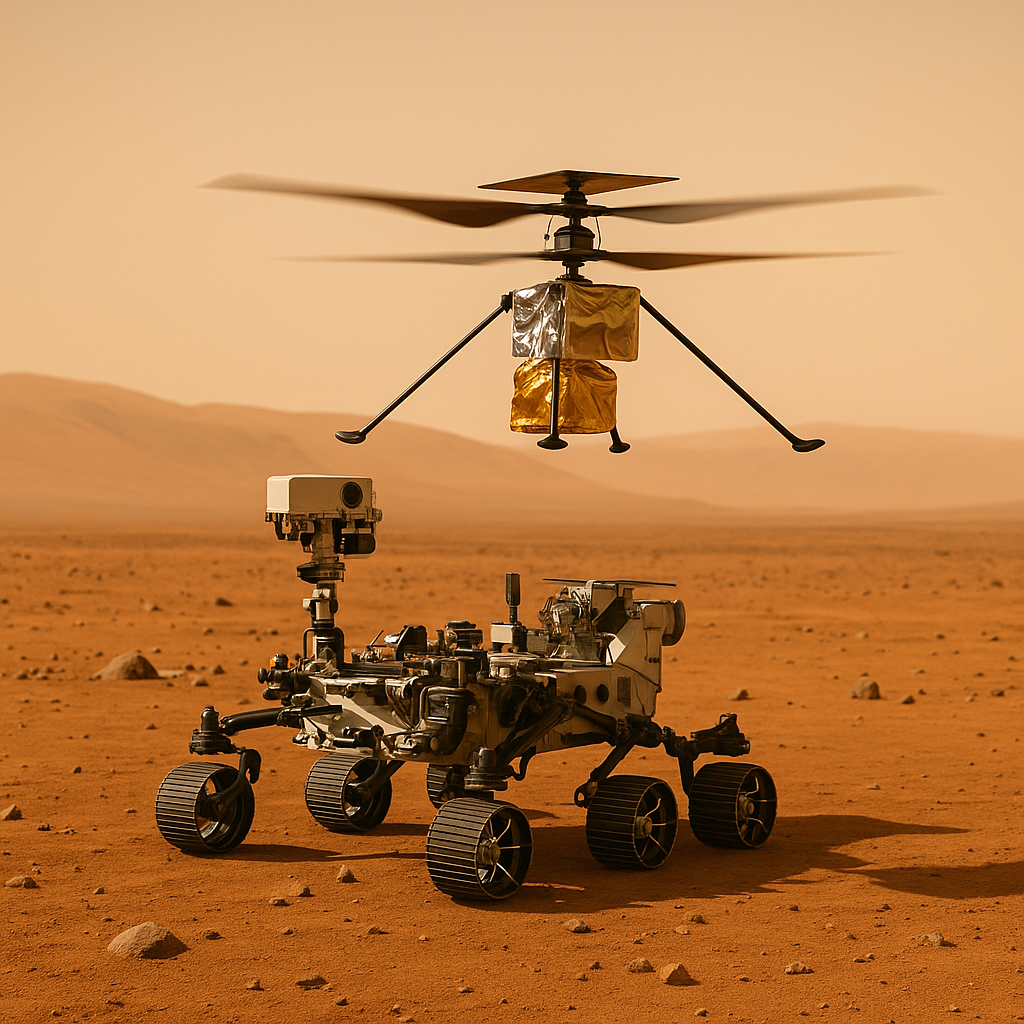
NASA has pushed rotor blade technology into supersonic flight during ground testing of its next-generation Mars helicopter, clearing a major engineering hurdle for a fleet of aircraft designed to scout terrain and support future crewed missions on the Red Planet. The achievement marks a decisive step beyond Ingenuity, the technology demonstrator that exceeded all expectations with 72 Martian flights since 2021.
The rotor blade tips reached supersonic speeds -- exceeding Mach 1 -- during the ground tests, a capability essential for flying in Mars's paper-thin atmosphere. With air density less than 1 percent of Earth's, the helicopters must spin their rotors at extreme velocities to generate enough lift for sustained flight. The test validates that NASA's design can overcome this fundamental physics constraint.
Ingenuity proved that rotorcraft could function in Martian conditions, but that 1.3-kilogram aircraft was built as a proof-of-concept with a five-flight mission plan. The successor generation will be substantially larger and far more capable. These helicopters are intended to carry small science payloads, scout landing zones and traversable terrain for future rovers, and potentially deliver equipment or samples across distances that would consume weeks of rover driving time. The scale-up introduces new aerodynamic challenges that pushed NASA engineers toward the supersonic rotor solution.
Flying on Mars demands speeds that would tear apart conventional helicopter designs on Earth. The thin atmosphere forces rotors to turn faster to maintain the same lift-to-weight ratio. Traditional blade designs generate shock waves and unpredictable aerodynamic behavior once tip speeds approach and exceed the speed of sound. NASA's research team developed rotor blades specifically engineered to operate efficiently in the transonic and low supersonic regime -- a regime virtually no helicopter has explored because there is no terrestrial reason to do so.
The ground testing, which produced video documentation of the supersonic rotor in action, confirms that the blade design maintains structural integrity and aerodynamic stability at these extreme speeds. This removes what was arguably the riskiest technical unknown in the program. The next hurdles involve power systems, flight control in Martian wind conditions, and autonomous navigation systems that allow the helicopters to operate with communication delays measured in minutes.
The broader implication is operational autonomy for future Mars exploration. A rover equipped with aerial scouts can map hazardous terrain before driving into it, identify scientifically interesting features at distances beyond ground-level visibility, and reduce mission duration substantially. For crewed missions, aerial reconnaissance becomes a critical safety tool for site selection and route planning.
The program now enters detailed design and prototype construction phases. NASA intends to have operational Mars helicopters ready for deployment alongside next-generation rovers in the early 2030s, with the first test flights on Mars likely in the second half of that decade.