NASA's X-59 Breaks Sound Barrier in Bid to Remake Supersonic Flight Rules
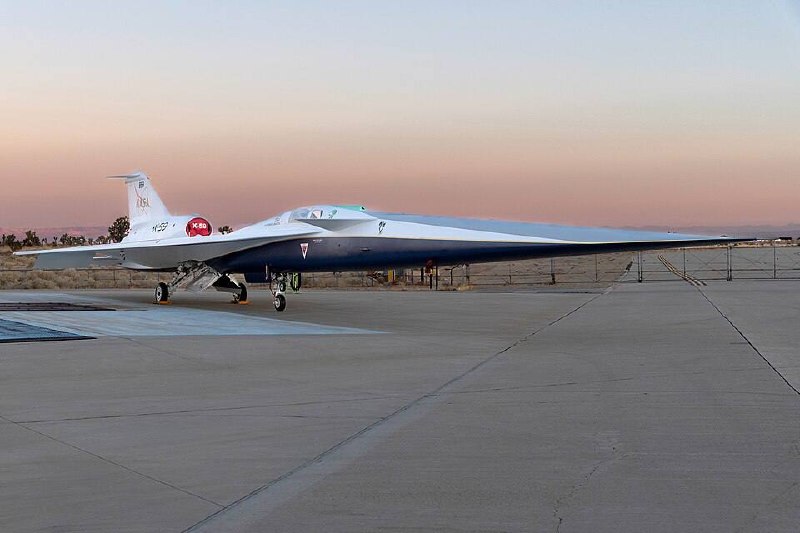
NASA's X-59 experimental aircraft crossed Mach 1.1 on June 5, marking the first supersonic flight of a jet specifically engineered to produce a quieter sonic boom. The milestone opens a critical testing phase that will determine whether the decades-old ban on overland supersonic flight can finally be lifted.
The X-59 is built around a singular engineering challenge: proving that an aircraft can exceed the speed of sound without producing the twin shock wave crackle that has made supersonic flight incompatible with life on the ground. Instead of the traditional double-crack boom, the X-59 generates a series of quieter pressure waves that NASA calls a "sonic thump." If flight testing validates this approach, regulators could approve commercial supersonic service over populated U.S. terrain for the first time since 1973.
Supersonic travel over land has been prohibited by the Federal Aviation Administration since the early 1970s, when Concorde operations and military test flights demonstrated the technology's capacity to rattle windows and trigger noise complaints across wide geographic areas. The ban effectively confined supersonic aviation to ocean crossings, making high-speed intercontinental routes commercially unviable. The X-59 exists to solve this problem through shaping and control strategies that break up shock waves rather than allowing them to coalesce into the characteristic double boom.
The first supersonic flight reached approximately 840 miles per hour at altitude, well above the 761-mph threshold that marks sonic transition at sea level. The flight occurred at Mojave Air and Space Port in California, where NASA maintains specialized facilities for experimental aircraft operations. The X-59 was piloted by Air Force Test Pilot School graduate Cmdr. Kristin Wolfe, who controls the aircraft from a modified cockpit positioned forward of the wing, designed to enable verification of low-boom characteristics in real flight conditions.
NASA plans an extensive testing campaign over the next two years, including flights over populated areas where ground sensors will measure actual acoustic signatures. The agency has coordinated with the FAA and the National Transportation Safety Board to establish test corridors. Data from these flights will be submitted as evidence in regulatory proceedings, with the goal of demonstrating that low-boom operations can meet acceptable noise standards. Supersonic aircraft manufacturers, including Boom Supersonic and Spike Aerospace, are watching the X-59 results closely, as certification standards for any future commercial supersonic service will rest substantially on what NASA proves.
Success would clear a path to transcontinental routes that could cut flight times dramatically. A New York to Los Angeles flight, now consuming roughly five and a half hours, could theoretically complete in under three hours at supersonic cruise, substantially shifting the economics of domestic travel.
The next critical juncture comes this fall, when NASA will conduct the first of several low-boom validation flights over Texas communities where ground-based microphone arrays will record the actual acoustic footprint.