Northrop Grumman Taps Startup Apex for 2027 Space-Based Interceptor Demo
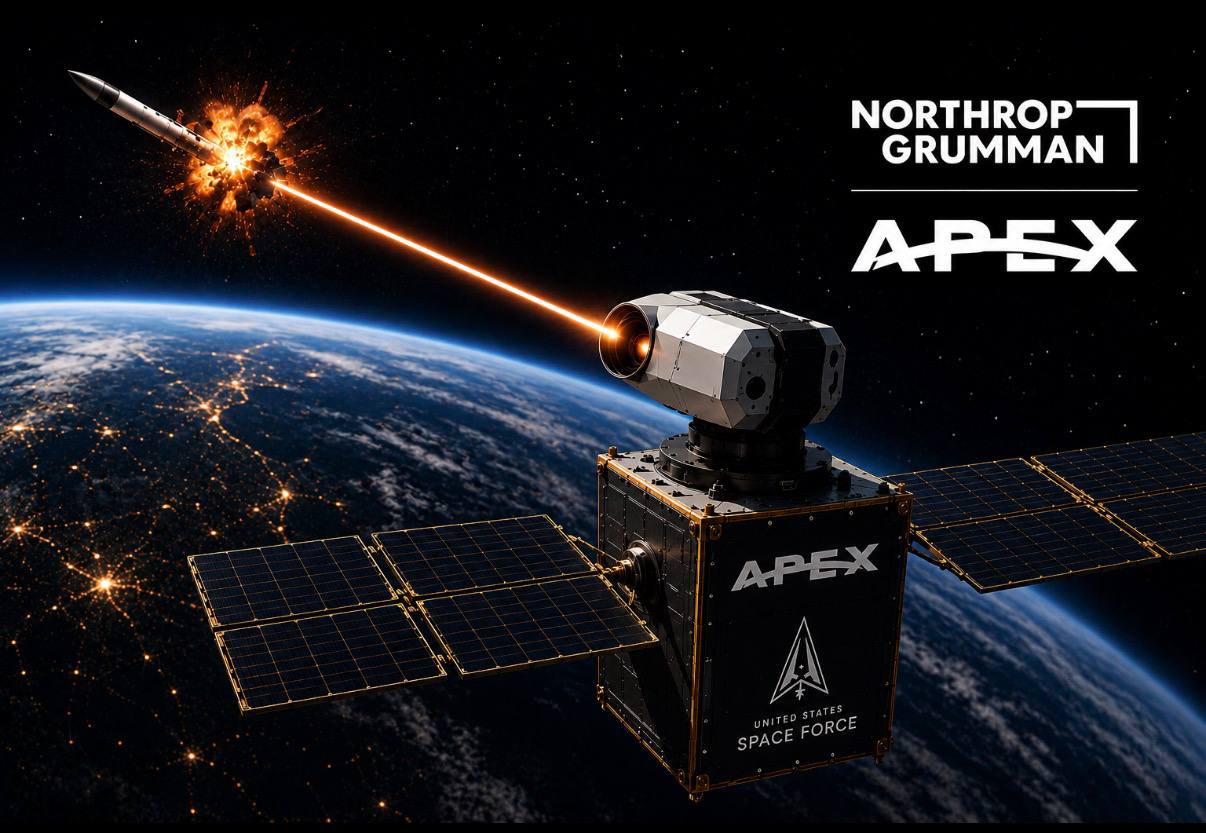
Northrop Grumman announced a partnership with Los Angeles satellite maker Apex Space to build and fly a space-based interceptor for the U.S. Space Force's Golden Dome program, targeting delivery in 2027. The collaboration pairs a traditional defense contractor's payload expertise with a commercial startup's satellite bus, signaling how the aerospace industry plans to accelerate space-based missile defense from theoretical to operational.
Space-based interceptors are satellites armed with kinetic hit-to-kill warheads designed to destroy ballistic missiles during their earliest flight phases. The concept has circulated in defense strategy circles for decades, but hypersonic threats and advances in orbital technology have shifted it from academic exercise to funded program. Golden Dome, established by Space Force Space Operations Command, aims to demonstrate that interceptors stationed in orbit can detect, track, and neutralize incoming threats faster and more effectively than ground-based systems. The 2027 demonstration window is aggressive but achievable, given current development timelines for military space missions.
Under the partnership announced June 1, Apex will provide the satellite bus, the foundational spacecraft platform that handles power, propulsion, attitude control, and structural integrity. Northrop Grumman will integrate and test the interceptor payload, the actual hit-to-kill system and its sensors. This division of labor reflects an emerging pattern in national security space: traditional primes increasingly rely on nimble startups for bus-level capability rather than building everything in-house. For Northrop, it marks the company's first public commitment to an operational SBI program. For Apex, it represents an entrance into the defense market at scale.
The timing carries competitive weight. Apex had previously announced its own self-funded SBI demonstration, Project Shadow, targeted for completion by the end of 2026. That effort gives the startup credibility and a degree of independence from traditional contractors. By partnering with Northrop rather than acting as a subcontractor, Apex gains both a pathway to an official Air Force program and retention of technical control over its core bus technology. Northrop, meanwhile, avoids the delays and costs that come with building novel spacecraft infrastructure from scratch.
Success of this model would reshape how the defense industrial base approaches space weapons development. If the Northrop-Apex partnership delivers a working interceptor on schedule and on budget, it validates the formula of pairing commercial spacecraft architecture with government-funded military payloads. That would likely trigger additional partnerships and accelerate fielding timelines across multiple Space Force programs. Conversely, delays or technical problems would argue for the traditional approach of assigning an entire system to a single large contractor with full responsibility.
The next critical checkpoint comes when Apex and Northrop complete preliminary design review for the satellite and interceptor integration. That milestone, likely in late 2024 or early 2025, will determine whether the 2027 demo remains feasible or slips into the 2028-2029 window typical of military space programs.