Space Force Awards $3.2 Billion to Begin Orbital Interceptor Program
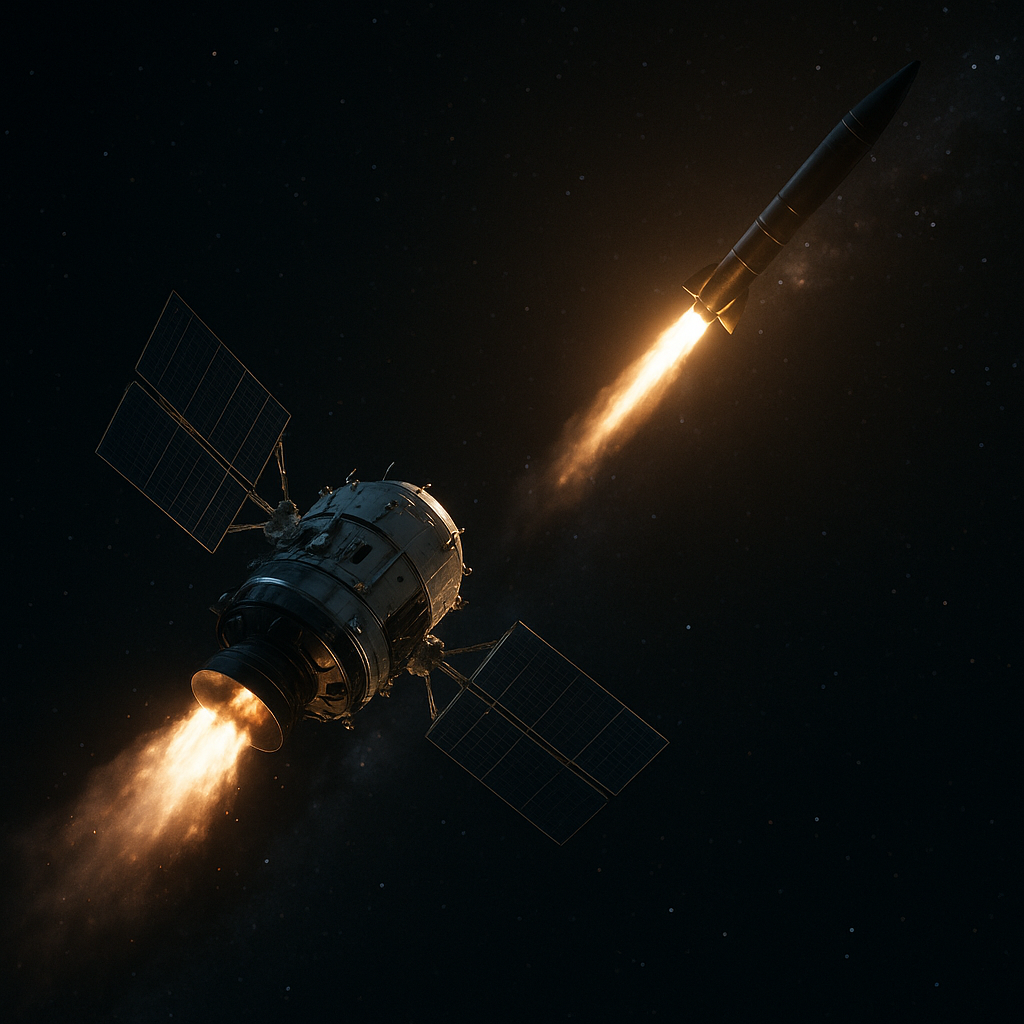
The U.S. Space Force has awarded up to $3.2 billion in contracts to launch hardware development for space-based interceptors -- orbital weapons designed to destroy missiles before they reach Earth. The move marks the formal start of the Pentagon's "Golden Dome" architecture, a Trump administration initiative to shift missile defense from ground and air platforms into space.
The contract represents the largest space weapons development award in recent memory and signals a strategic commitment to militarizing near-Earth orbit. A concurrent Congressional Budget Office analysis pegs the full program's lifetime cost at $1.2 trillion, making it potentially one of the costliest defense initiatives ever undertaken.
Space-based interceptor concepts have circulated in Pentagon planning for two decades, but political and technical hurdles repeatedly delayed hardware investment. The Trump administration revived the concept as part of a broader effort to counter hypersonic weapons from China and Russia -- missiles that travel at speeds exceeding Mach 5 and defeat traditional ground-based defense systems. By positioning interceptors in orbit, the Pentagon argues it can engage threats in their boost and midcourse phases, when they are slower and more vulnerable than during reentry.
Golden Dome encompasses multiple layers -- satellites equipped with infrared sensors for tracking, command-and-control networks, and the kinetic interceptors themselves. Each interceptor would use direct impact, or "hit-to-kill," to destroy incoming warheads without needing conventional or nuclear warheads. The architecture is designed to operate continuously, providing persistent coverage across all regions of the globe.
The $3.2 billion initial contract covers preliminary design, engineering analysis, and prototype hardware development. This phase is expected to span several years before any operational system reaches orbit. The Space Force has not publicly identified the winning contractors, though the effort is likely to involve prime defense integrators working alongside smaller aerospace firms specializing in satellite systems and propulsion.
The CBO's $1.2 trillion lifetime estimate encompasses development through deployment and 30 years of operational costs, including satellite replenishment, maintenance, and command infrastructure. That figure exceeds the inflation-adjusted cost of the Apollo program by a significant margin, and dwarfs recent major acquisitions like the F-35 fighter, which totals roughly $1.6 trillion across all variants and decades of operation.
Critics have questioned whether the cost justifies the capability, noting that boost-phase intercept opportunities are fleeting and that space-based systems face challenges from debris, orbital mechanics, and potential adversary counteractions. Proponents counter that the threat from advanced adversary missiles makes the investment necessary, and that distributed space-based systems are inherently more resilient than centralized ground defenses.
The program will face sustained Congressional scrutiny. Additional funding requests will be required to progress from development into production and eventual deployment -- a process typically spanning 10-15 years for systems of this complexity. Budget debates will intensify if costs climb or technical setbacks emerge.
Watch for the Pentagon's detailed program plan and preliminary design reviews scheduled for next fiscal year, which will clarify the interceptor's technical approach and confirm developmental timelines.