SpaceX Dragon Delivers 6,500 Pounds of Cargo to Space Station
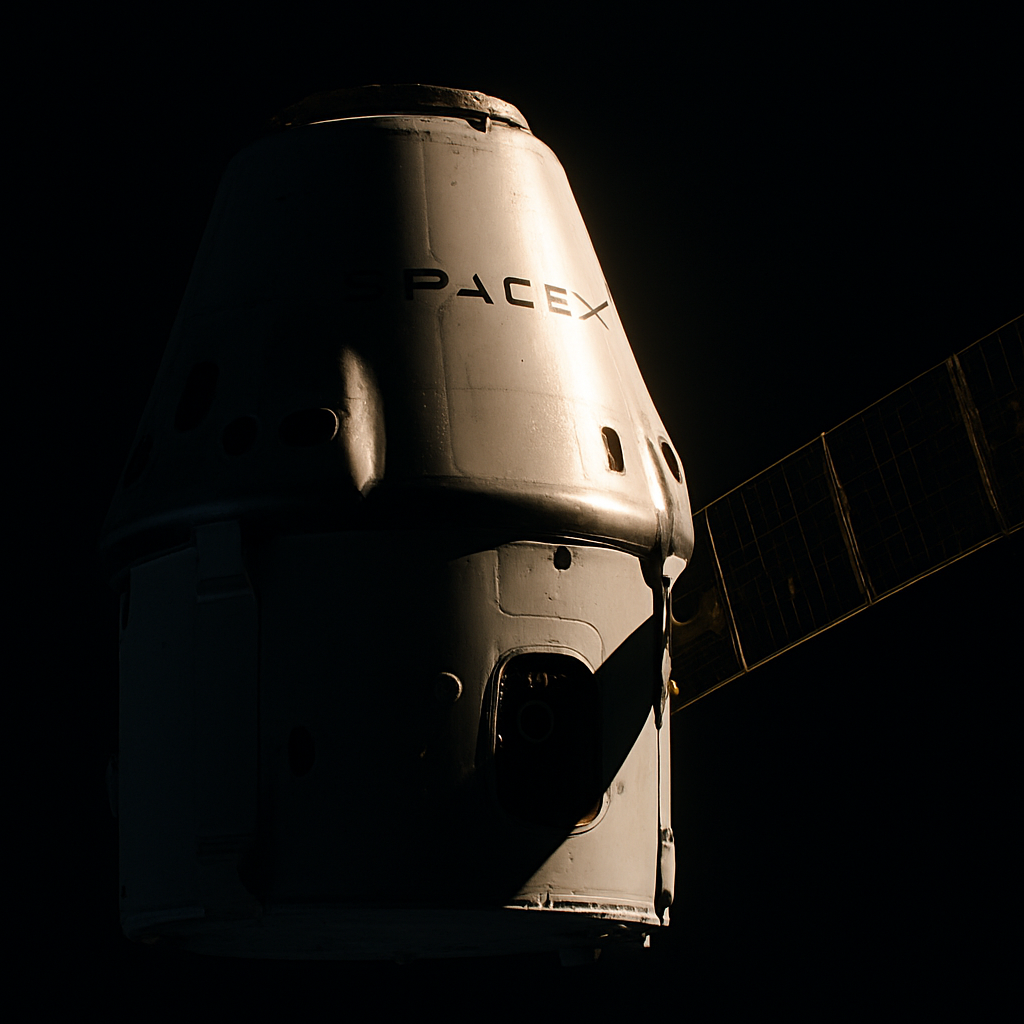
A SpaceX Dragon cargo spacecraft docked with the International Space Station on Sunday, delivering 6,500 pounds of science experiments and supplies to the orbiting laboratory. The mission marks another routine resupply run under NASA's Commercial Resupply Services program -- a cadence that reflects how thoroughly space logistics has been industrialized over the past decade.
Ten years ago, commercial cargo delivery to the ISS remained an unproven concept. SpaceX and Orbital ATK were still establishing the operational reliability that governments demanded for critical supplies to the station. Today, that capability is so established that autonomous docking procedures occur with minimal fanfare. Dragon has become infrastructure -- the backbone of a scheduled transportation system rather than a technological milestone.
The Commercial Resupply Services program fundamentally restructured how NASA accesses low Earth orbit. Rather than maintaining exclusive control of logistics through government-owned vehicles, the agency contracts with private operators to deliver cargo on predictable schedules. This shift has reduced costs and created a sustainable model that other nations and commercial entities now emulate. SpaceX's Dragon remains the dominant player in this market, with dozens of successful missions completed.
Dragon's unique capability -- returning cargo intact to Earth -- distinguishes it from competing systems. Orbital's Cygnus spacecraft burns up on reentry. Progress resupply vehicles do the same. Only Dragon preserves experiments, hardware samples, and materials by splashing down in the Pacific Ocean under parachute. This recovery capacity is essential for time-sensitive biology experiments, materials research, and equipment requiring hands-on analysis by ground teams.
The May 17 docking occurred autonomously, with Dragon's guidance systems managing the approach and station capture without crew intervention. The spacecraft carried materials science experiments, biological research samples, and replacement hardware for station systems. Cargo manifests for these routine missions typically include a mix of NASA payloads and research from international partners using the station as an orbital laboratory.
SpaceX has now completed dozens of cargo missions under the CRS contract, with additional flights scheduled through 2028. The company simultaneously operates the crew variant of Dragon, which carries astronauts to the station. This dual-use approach -- cargo and crew on the same platform -- gives SpaceX operational flexibility that earlier commercial providers lacked.
The operational maturity of Dragon resupply missions creates the foundation for everything else currently being planned in space. Lunar Gateway construction depends on reliable cargo transport to lunar orbit. Commercial space stations under development assume regular resupply service as a given. Artemis missions assume Earth orbit logistics will function automatically. None of these ambitious programs would be feasible without first proving that routine cargo delivery works -- which it does.
The significance of Dragon's mission lies not in novelty but in reliability. Routine space logistics were not inevitable; they required sustained investment and operational discipline. That mundane status now enables the next generation of space infrastructure.
Watch for the spacecraft's return window in early June, when Dragon will carry recovered experiments back to Earth -- a capacity no other cargo vehicle currently provides.