SpaceX Falcon 9 Booster Reaches 35th Flight, Extending Reusability Lead
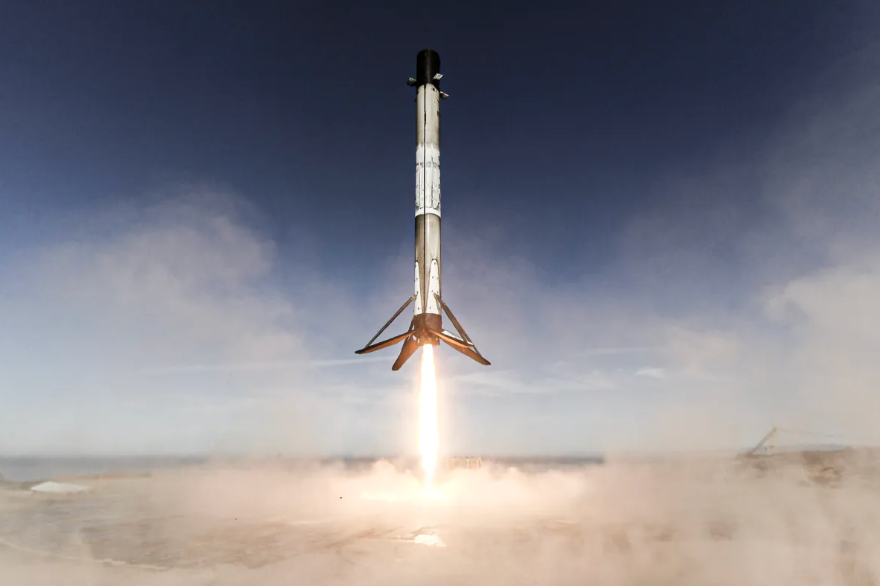
A SpaceX Falcon 9 booster completed its 35th orbital flight on June 7, carrying Starlink satellites to orbit from Cape Canaveral Space Force Station. The milestone extends SpaceX's commanding lead in rocket reusability, a capability that translates directly into lower launch costs and higher flight rates for the company's commercial and national security customers.
The booster lifted off from pad 40 at 6:07 a.m. EDT carrying the Starlink 10-35 payload, the 53rd dedicated launch of SpaceX's internet constellation. The mission itself was routine, a Saturday morning launch that drew minimal attention outside the spaceflight community. That ordinariness understates the significance. The same booster has now flown 35 times and returned safely to Earth after each flight, a level of operational reusability that no other orbital rocket has approached.
SpaceX developed rapid reusability as a core operating principle starting with the Falcon 9's first landed booster recovery in 2015. Over more than a decade, the company progressively shortened turnaround times between flights and extended the service life of individual boosters. Competitors including United Launch Alliance and Arianespace designed their next-generation rockets with reusability as a longer-term goal, but none has demonstrated comparable reliability or flight rates from recovered hardware. SpaceX's previous-generation Falcon 9 boosters have reached 20 flights, setting industry records until the company's newer boosters began surpassing those numbers.
The booster flying on June 7 holds the company's reusability record, having completed 34 flights before this mission. Its 35th flight adds another data point to SpaceX's expanding library of evidence that Falcon 9 boosters can reliably fly dozens of times with proper maintenance between flights. Each additional flight proves the underlying economics work and reduces the effective per-launch cost of the Falcon 9, a factor that strengthens SpaceX's competitive position across commercial satellite launches, national security missions, and cargo resupply to the International Space Station.
The implications extend beyond SpaceX's balance sheet. The company's reusability advantage represents a structural cost advantage that competitors cannot easily replicate without years of development and flight testing. SpaceX currently operates multiple Falcon 9 boosters in active rotation, allowing the company to launch at higher cadences than rivals whose manufacturing timelines dictate their flight schedules. If this booster continues to maintain the same flight rate, it will reach 50 missions before most competitors' rockets complete their first 10 flights.
The next milestone to watch is whether SpaceX maintains or accelerates the flight rate of this booster and others in its inventory. The company has cited plans to fly Falcon 9 boosters up to 100 times across their operational life, a target that current performance trajectories suggest is achievable. The June 7 flight is one step closer to proving that claim.