SpaceX Sets Sights on 10,000 Annual Launches in IPO Prospectus
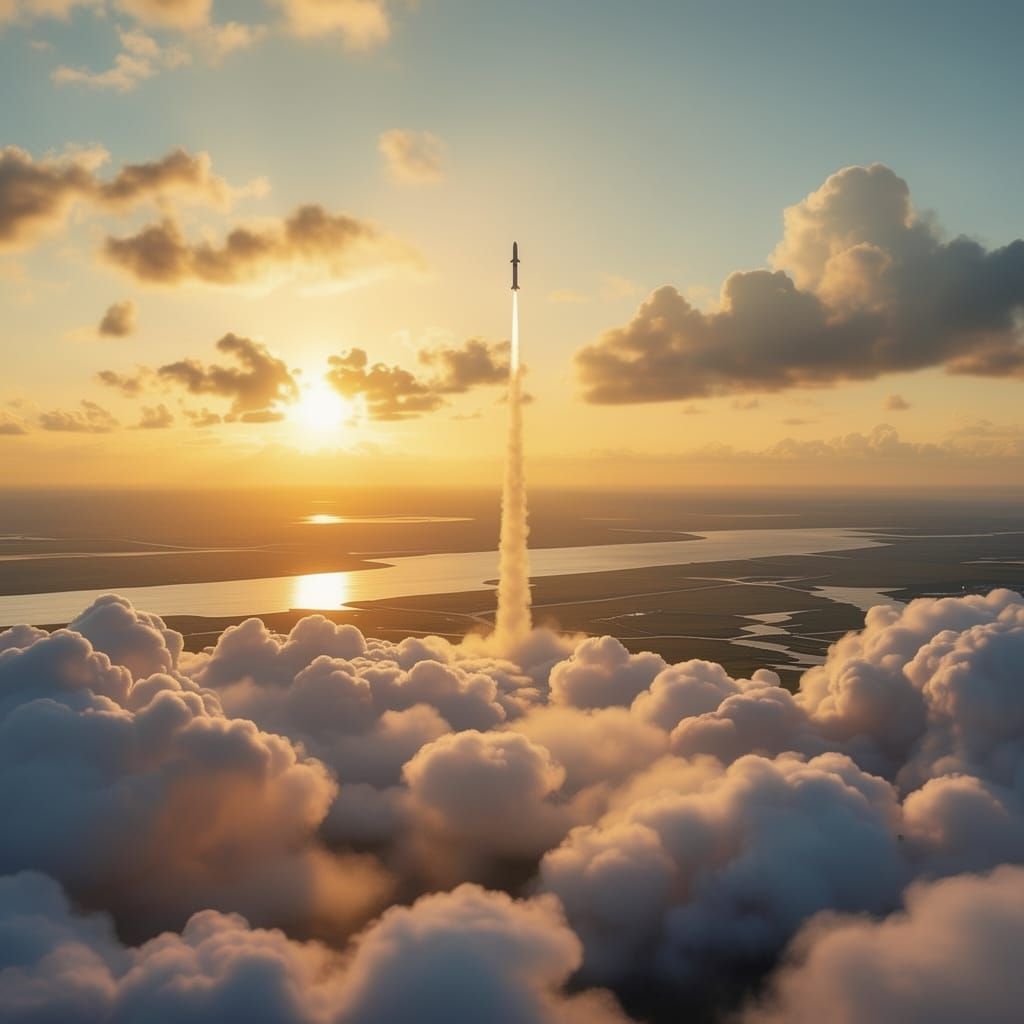
SpaceX revealed an extraordinary ambition in its initial public offering filing released May 20, 2026: conducting 10,000 launches per year. The target, confirmed by President and Chief Operating Officer Gwynne Shotwell in the prospectus, represents a roughly 67-fold increase from the company's current operational cadence and underscores its vision for Starship as the foundation of a fundamentally transformed space economy.
The company has not specified a timeline for reaching this figure, though the prospectus makes clear that the goal depends on achieving full and rapid reusability of the Starship vehicle. At present, SpaceX conducts approximately 150 launches annually across its Falcon 9 and Falcon Heavy fleet. The 10,000-launch target would mean sustaining an average of roughly 27 launches per day, every calendar day, throughout the year.
SpaceX's growth trajectory has been striking. The company conducted 67 launches in 2023, 144 in 2024, and roughly 150 in 2025, establishing itself as the world's dominant launch provider by volume. That expansion occurred while Starship was still in the developmental phase, with only suborbital and early orbital test flights completed. The prospectus indicates that full operational capability of Starship, combined with fleet-scale operations, would enable the company to pursue this significantly higher cadence.
For context, the global launch industry conducted approximately 200 orbital launches in 2025 across all providers combined. SpaceX alone accounted for roughly three-quarters of those. A sustained rate of even 1,000 launches annually would exceed the total launch capacity of the rest of the world's space industry combined. At 10,000 launches per year, SpaceX would effectively become the launch infrastructure itself rather than merely dominating the launch market.
The prospectus, filed ahead of what is expected to become the largest initial public offering in history, provides few additional details on the operational requirements, infrastructure investments, or regulatory pathways necessary to achieve this scale. The document does emphasize Starship's design philosophy centered on rapid turnaround, multiple daily flights per vehicle, and autonomous systems to minimize ground crew requirements and hardware refurbishment time between missions.
Reaching 10,000 annual launches would fundamentally restructure multiple industries simultaneously. The cost of orbital access would likely drop to levels that enable entirely new categories of space-based applications, from orbital refueling depots to large-scale satellite constellations to routine point-to-point hypersonic transport. Manufacturing, launch operations, and orbital logistics would all require substantial expansion of infrastructure and trained workforce.
The prospectus does not commit SpaceX to any specific timeline or binding target for the 10,000-launch goal. Achieving it will depend on demonstrating Starship's technical feasibility at scale, securing necessary launch range approvals and orbital debris mitigation standards, and building sufficient ground infrastructure to support that operational tempo. The next critical milestone comes when SpaceX begins operational flights of Starship on commercial missions, which the company has indicated could occur within the next 12 to 18 months.