SpaceX to Debut Upgraded Starship and New Launch Pad on May 19
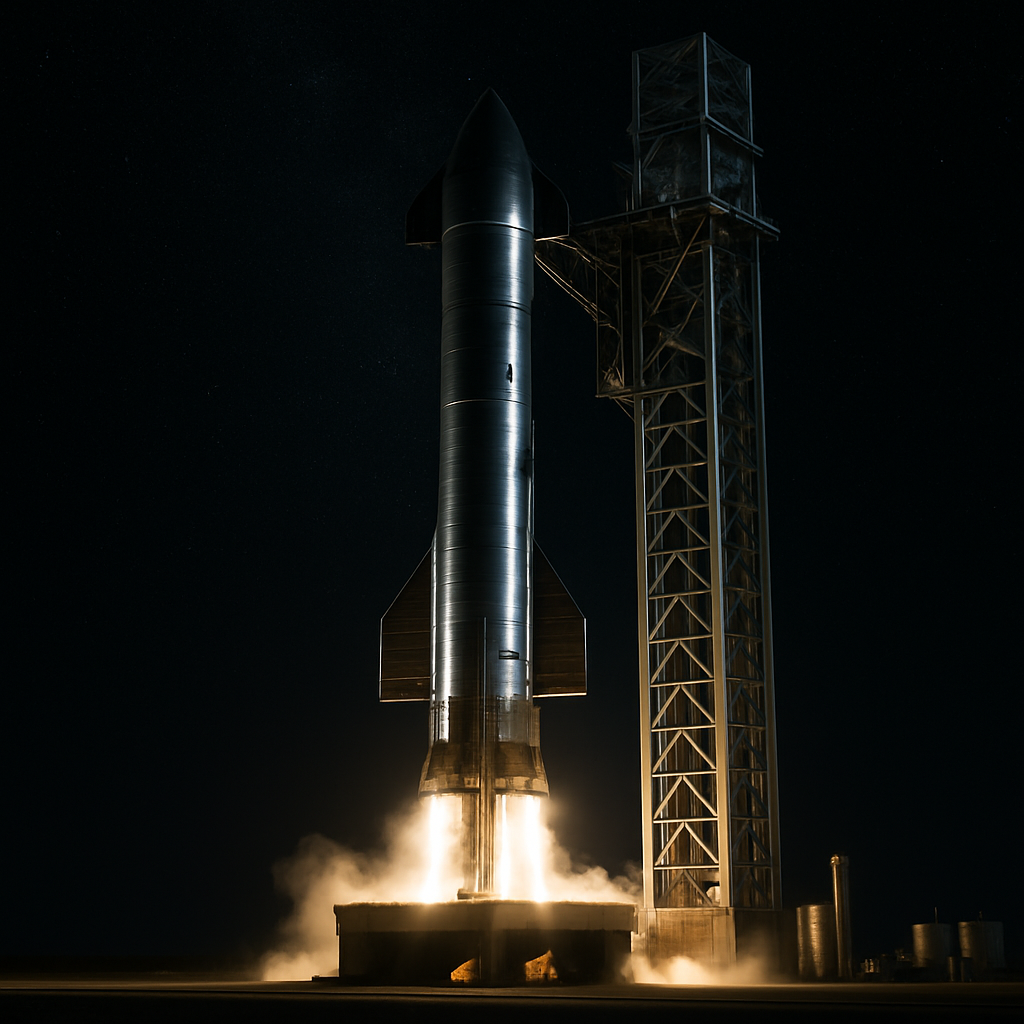
SpaceX has set May 19 as the target launch date for Starship Version 3, the most substantially redesigned iteration of its super-heavy launch system yet. The flight will also mark the operational debut of Launch Pad 2 at Starbase in South Texas, a facility the company has spent two years constructing to support increased flight cadences. Completion of a full fueling test on May 12 -- the first time the upgraded vehicle accepted propellant -- cleared a major milestone toward that date.
The Starship program has advanced through three complete vehicle revisions in four years, an iteration pace that mirrors SpaceX's approach to the Falcon 9 in the 2010s. But Starship V3 represents a qualitative leap. The redesign touches dozens of subsystems across the Super Heavy booster, the Starship upper stage, and the next-generation Raptor 3 engines that power both. These are not cosmetic changes or minor refinements. The company has redesigned structural load paths, thermal management, plumbing, avionics integration, and engine interface architecture -- each one informed by data from previous test flights and ground testing campaigns.
Launch Pad 2 itself embodies a strategic bet on rapid reusability. Traditional pad design assumes a single launch vehicle launches maybe once or twice yearly. The new pad incorporates high-speed propellant loading systems, automated booster catch apparatus designed for the Super Heavy's return trajectory, and real-time structural monitoring to reduce turnaround time between flights. SpaceX has not disclosed the target cadence the pad is designed to support, but the infrastructure investment signals confidence that future Starship flights will occur at intervals measured in weeks, not months.
The May 19 flight sits directly in the critical path for NASA's Artemis 3 lunar landing mission, officially scheduled for 2027. That timeline depends on Starship demonstrating orbital refueling capability, crew-scale life support systems, and landing leg performance in lunar conditions. Earlier Starship test flights achieved booster catch and controlled ocean splashdown of the upper stage, proving basic flight control and booster reusability. V3 must advance beyond proof-of-concept to demonstrate the reliability margins NASA requires for human spaceflight.
The fueling test completion -- conducted with the vehicle at full stack height on Pad 2 -- served as a systems integration checkpoint. SpaceX loaded both the booster propellant tanks and the upper stage tanks with liquid methane and liquid oxygen, validating plumbing layouts, seal integrity, vent stack design, and ground support equipment operation. No other aerospace company has attempted this operational tempo with a vehicle this complex. The technical risk remains material.
Success on May 19 would represent a watershed moment for the reusable spaceflight industry. SpaceX will have proven it can simultaneously mature a complex flying vehicle, build and validate new launch infrastructure, and maintain schedule discipline toward a government deadline -- a combination that has historically defeated even well-resourced programs.
Watch for any anomalies during the countdown itself. SpaceX has historically used test flights to exercise abort scenarios. How the May 19 mission concludes -- and whether pad systems perform as designed under real operating conditions -- will determine whether Pad 2 can actually support the monthly launch cadence the company implies it was built for.