Star Catcher Closes $65M Funding Round to Build Space Power Network Using Lasers
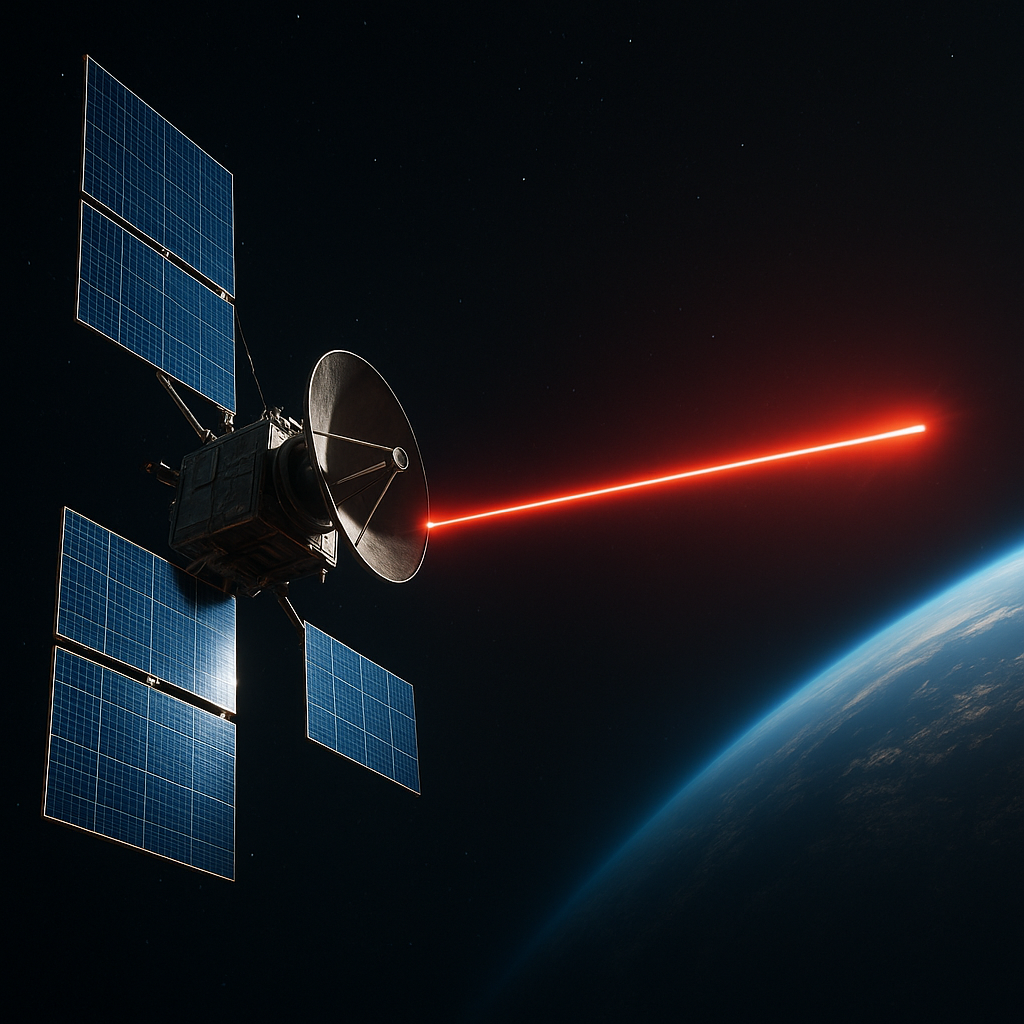
Florida-based Star Catcher Industries has secured $65 million in Series A funding to deploy a constellation of satellites that beam power to other spacecraft via laser -- a foundational step toward the first functioning orbital power grid. The oversubscribed round, led by B Capital, drew investor interest exceeding $90 million, signaling institutional confidence in the concept.
The funding validates an emerging category of space infrastructure that sits between launch services and on-orbit manufacturing. Rather than selling access to space, Star Catcher aims to sell a fundamental commodity -- power -- to any satellite operator in Earth orbit. This represents a conceptual shift in how the space economy functions: instead of each spacecraft carrying its own solar panels and battery systems, operators could contract with Star Catcher for on-demand wireless power delivery.
Space power beaming has long been theoretically possible but remains technically unproven at commercial scale. The concept uses high-powered lasers or microwave systems to transmit energy across the vacuum of space to receiving stations on target spacecraft. Advantages include reduced payload mass for customer satellites, extended mission life without degradation of solar panel efficiency, and the ability to support power-intensive operations in eclipse or on the lunar far side. Historically, the technology faced skepticism about efficiency losses and pointing accuracy over orbital distances.
Star Catcher's push suggests these technical barriers are moving toward solution. The company now has $88 million in total capital raised, including the new Series A led by B Capital, with participation from Shield Capital and Cerberus Ventures. The round's 38 percent oversubscription -- interest reached $90 million against a $65 million close -- indicates venture and strategic investors are willing to bet on orbital power becoming a critical input for future space operations.
The timing aligns with accelerating demand for on-orbit infrastructure. Commercial satellite constellations are growing in number and complexity, while government agencies push for sustained lunar operations and eventual cislunar logistics networks. Both require reliable, scalable power beyond what dedicated solar generation allows. A third-party power provider could unlock entire classes of missions currently deemed power-limited or economically marginal.
Success requires Star Catcher to execute three overlapping challenges: demonstrate laser power transfer efficiency in orbit, achieve consistent pointing and tracking between moving spacecraft, and build a commercial model that undercuts the cost of onboard power systems. The company must also navigate regulatory frameworks for high-powered lasers in space -- an area where international standards remain nascent.
If Star Catcher reaches operational deployment, the strategic implications extend beyond aerospace. Space utilities -- entities providing essential services like power, propellant, or communications to other operators -- have historically exhibited monopoly-like characteristics and stable, predictable revenue. That profile has long attracted institutional capital seeking infrastructure-grade returns.
Watch for Star Catcher's first on-orbit demonstration, likely within 24-36 months. That proof-of-concept will determine whether orbital power becomes a service layer or remains a specialized capability for premium missions only.